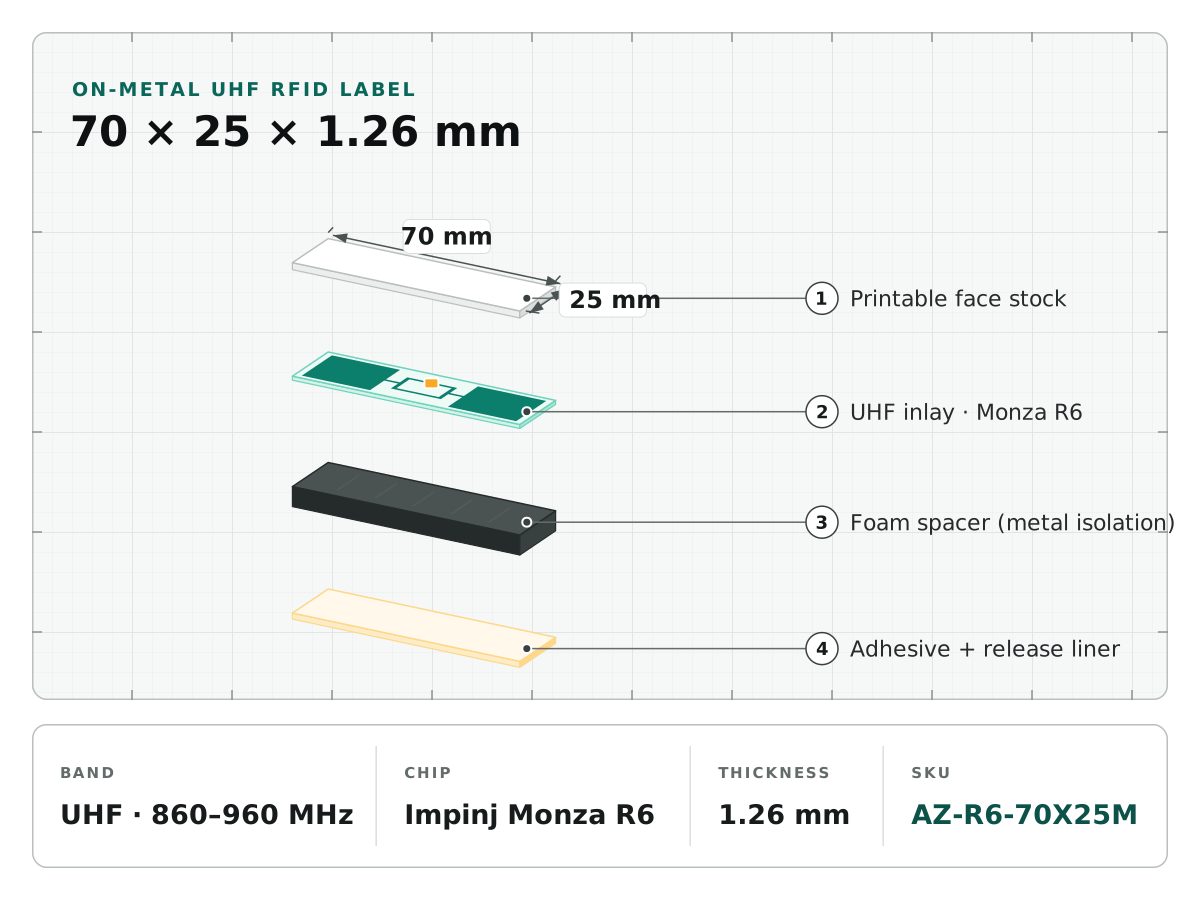
 UHF
AZ-R6-70X25M
Monza R6 On-Metal RFID Tag, 70 × 25 × 1.26 mm
- Chip
- Impinj Monza R6
- Antenna size
- 70 × 25 mm
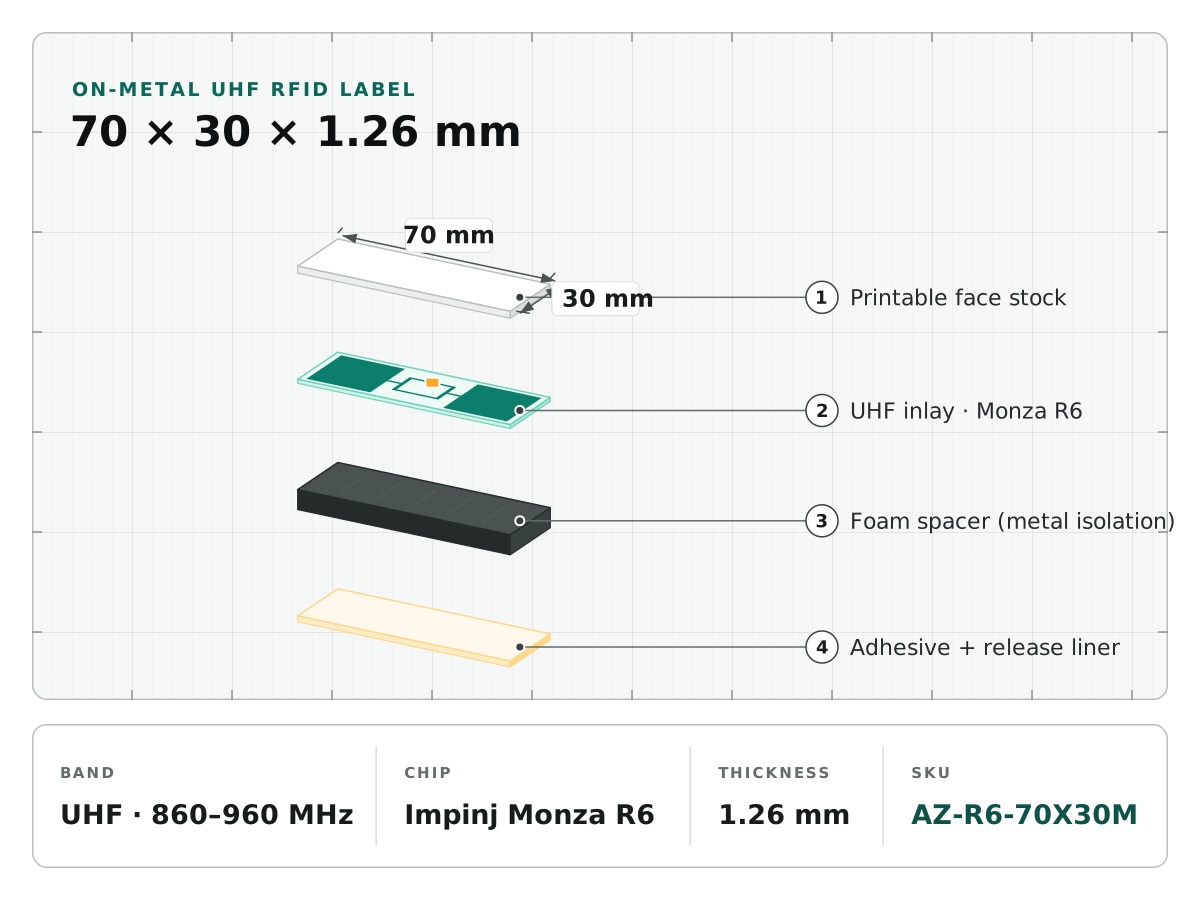
AZ-R6-70X30M
A 70 × 30 mm on-metal RFID label with Monza R6, only 1.26 mm thick, built to read when mounted directly on metal.
Validate samples first. Engineer reply within 24 h.
Check suitability for your application
See the sample validation checklist
| SKU | AZ-R6-70X30M |
|---|---|
| Frequency | UHF 860–960 MHz |
| Protocol | EPC Gen2v2 (ISO/IEC 18000-63), RAIN RFID |
| Chip | Impinj Monza R6 |
| Memory | 96-bit EPC, serialized 96-bit TID, no user memory |
| Chip read sensitivity | −22 dBm (vendor reference) Vendor-specified measurement conditions; not finished-tag performance |
| Chip status | Impinj lists Monza R6 as end-of-life; ask us about current alternatives before a new design. |
| Antenna size | 70 × 30 mm |
| Thickness | 1.26 mm |
| Format | On-metal label |
| Read range | up to 4 m (reference) depends on reader, antenna, power and the tagged material |
| Typical applications | Metal assets & IT |
Monza R6 On-Metal RFID Tag, 70 × 30 × 1.26 mm is a UHF on-metal RFID label built around the Impinj Monza R6 chip, measuring 70 × 30 × 1.26 mm. A standard inlay stuck directly on steel or aluminium is detuned and usually cannot be read; this label uses a foam spacer to hold the antenna away from the surface while staying only 1.26 mm thick, so it can be mounted directly on metal.
Impinj Monza R6 provides 96-bit EPC, serialized 96-bit TID, no user memory. Impinj lists read sensitivity of −22 dBm and write sensitivity of −17 dBm as vendor reference values (Vendor-specified measurement conditions; not finished-tag performance). Validate the complete tag with samples on the intended item and reader setup. Datasheet highlights: AutoTune adaptive RF tuning, Integra memory diagnostics, Enduro bonding pads, FastID and TagFocus. Please note: Impinj lists Monza R6 as end-of-life; ask us about current alternatives before a new design.
Reference read range: up to 4 m (reference). Real-world range depends on the reader, antenna, power and the material the tag is attached to, so treat it as a comparison value and confirm it with samples on your own items.
Typical mounting surfaces are IT equipment, tools, metal containers and machine parts. Apply it to a flat, clean metal area; the label is tuned for metal, so on plastic, wood or cardboard a standard UHF inlay is usually the better and cheaper choice.
It ships as a foam-spacer on-metal label; face printing (asset numbers, logos, barcodes), EPC encoding and other sizes are quoted on request. We send samples first so you can test on your own metal parts, and volume orders are produced with our ISO 9001-certified production partner with 100% inline electrical testing.
Vendor documents describe the chip, not finished-tag read range.
Confirm catalog dimensions against the final tag construction. Reference read ranges require sample testing on your item with your reader setup.
Confirm the construction and encoding during sampling, then quote the configuration you validated.
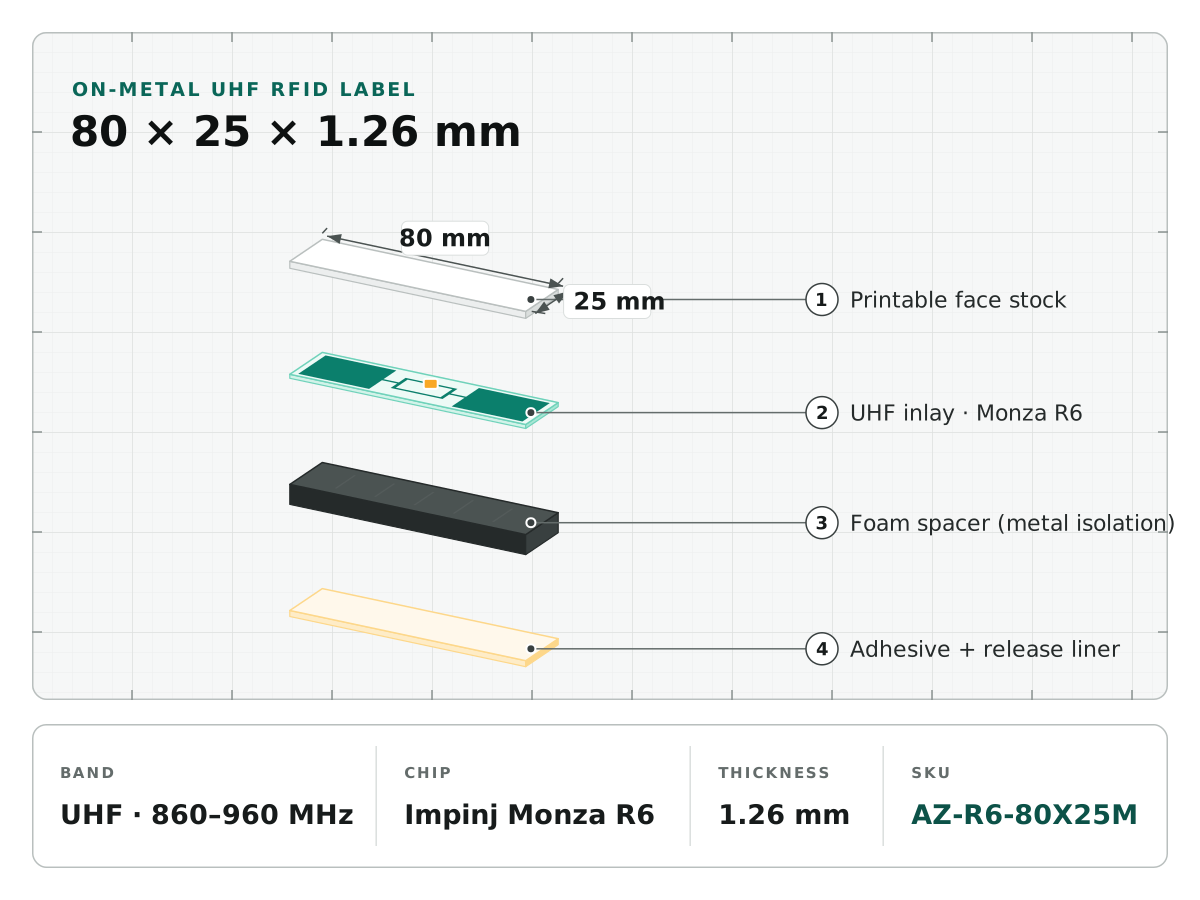
Antenna and chip over a foam spacer with adhesive back, for flat metal surfaces.
Asset numbers, logos, barcodes or QR codes printed on the face stock.
EPC written to your numbering scheme before shipping, locked on request.
Other sizes or thicknesses assessed and quoted on request, validated with samples.
Agree the actual use conditions and pass criteria before selecting samples. The catalogue supports shortlisting; confirm finished-tag performance and delivery configuration in writing and through sample validation.
Record the metal material, dimensions, curvature, assembly state and mounting position. Fix reader and antenna settings, use the final spacer, face stock and adhesive, and define the intended read zone.
Check unique identities inside the target zone and unintended reads outside it. Read back the EPC against printed IDs. Inspect lifting edges, adhesion and behavior after relevant handling; record separate acceptance decisions.
Record the SKU, sample revision, lot, device settings, results and approver. Confirm final dimensions, materials, printing, encoding, quantity and delivery requirements, and agree which configuration changes require another trial.
Use the test record to save actual conditions and results. English and Chinese worksheets are provided; the agreed reviewer determines acceptance.
Download test recordShare surface, read distance, chip preference and volume. We shortlist tags that fit.
Receive sample tags of the shortlisted designs to try in your own setup.
Test on your items, readers and printers. We adjust chip, size or format if needed.
Volume production with 100% inline electrical test, then export shipping.
Choose an on-metal RFID label by mounting surface, available area, thickness and reader workflow. Test the complete structure before approving bulk supply.
RFID read range depends on the complete system. Control power, antenna, surface, orientation and reader settings when comparing labels on real objects.
UHF AZ-R6-70X25M
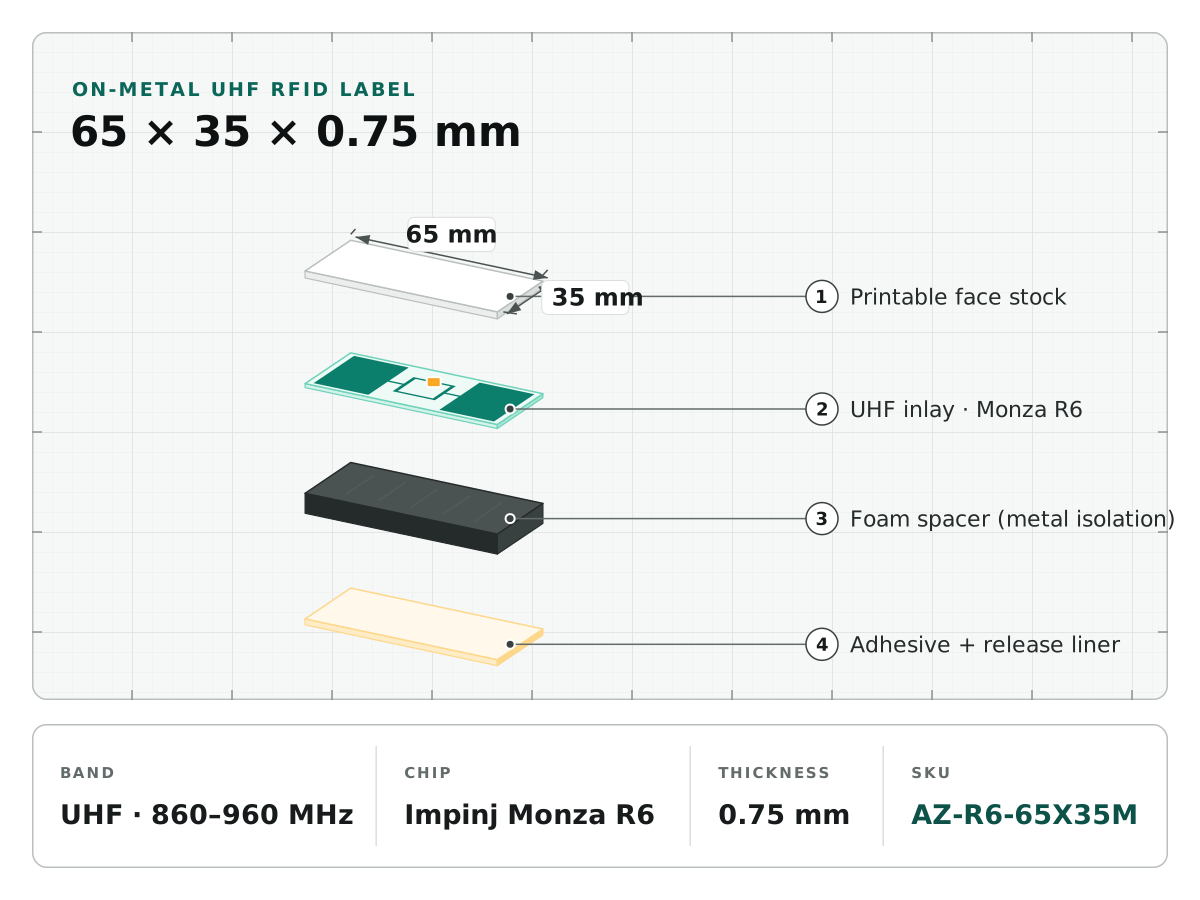 UHF
AZ-R6-65X35M
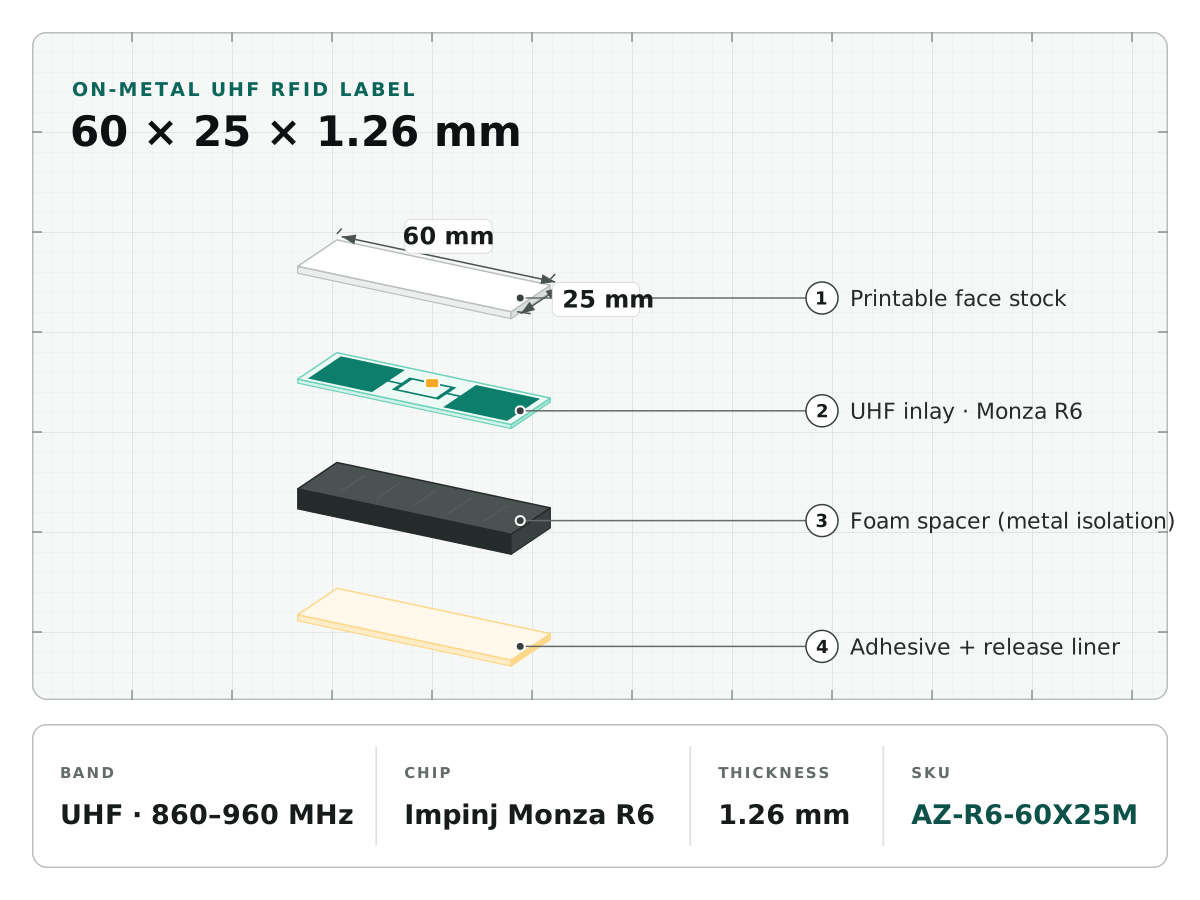 UHF
AZ-R6-60X25M
 UHF
AZ-R6-80X25M
Talk to an RFID engineer
Send the surface, read distance and volume. An engineer replies within 24 hours with a recommendation and a sample plan.
Email us: sales@antenza.com