 UHF
UHF Application engineering
RFID Tags for Automotive Manufacturing
Give every part carrier, fixture and container a serialized identity that survives the line, so traceability happens automatically.
Design for the real reading environment
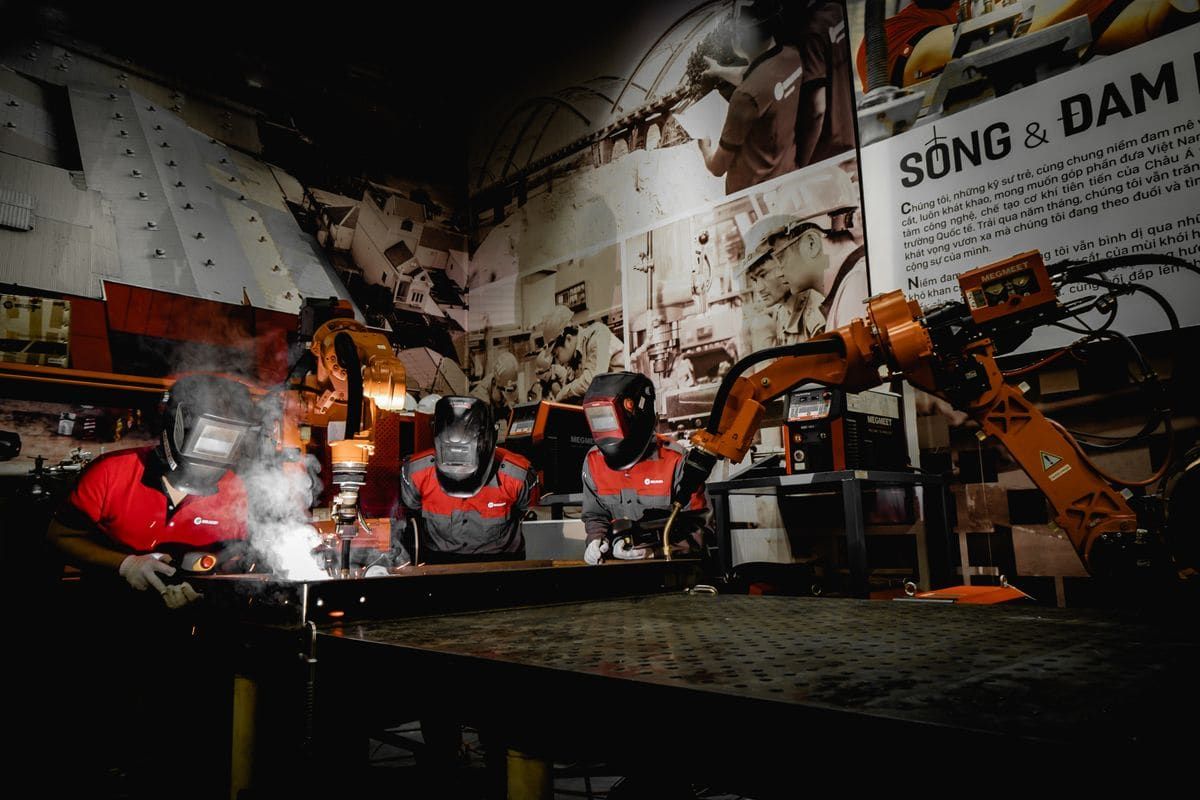
Automotive production is serialized by nature (VINs, lot codes, torque records), but much of that identity still travels on paper travelers and hand-scanned barcodes. RFID moves identity onto the carrier or the part itself: stations read work in progress as it arrives, and the genealogy record builds without manual scans.
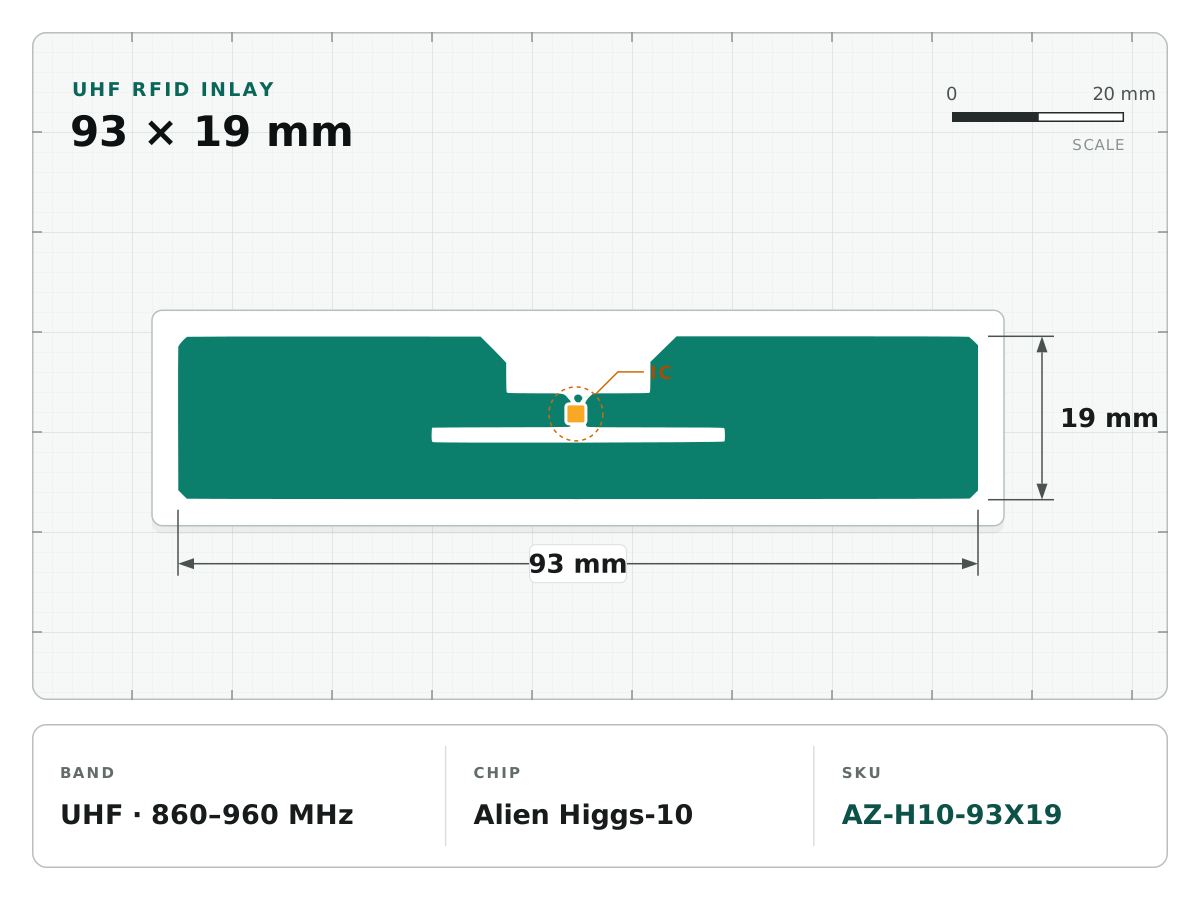
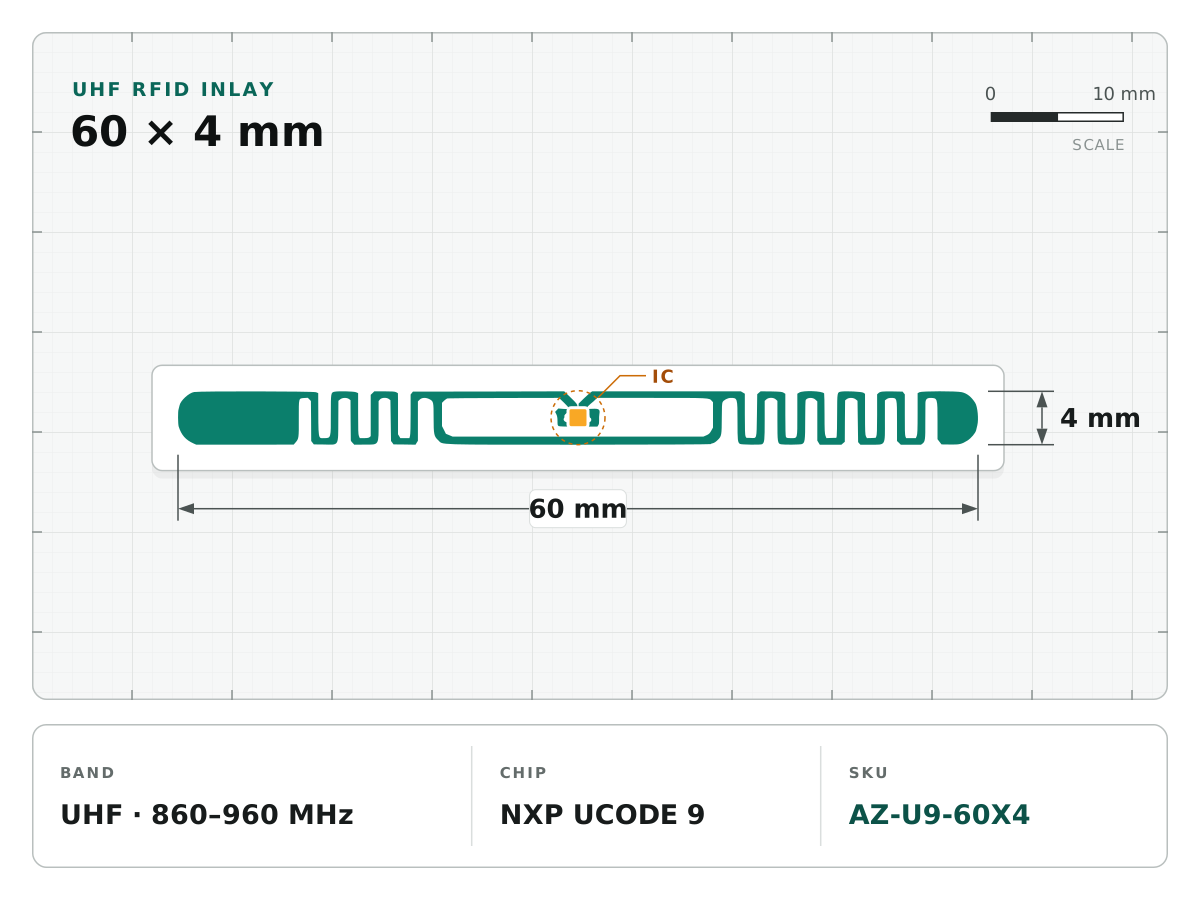
Antenza supplies UHF tags for carriers and skids, tooling and fixture registers, kanban and container loops, and part labelling. Listed inlays include 93 × 19 mm Alien Higgs-9 and Higgs-10 designs and a slim 60 × 4 mm NXP UCODE 9 inlay; metal-heavy points use our on-metal tags.
Where identity leaks on the line
- 01
Paper travelers
Route sheets get wet, torn and mis-keyed; the genealogy record is only as good as the last manual scan.
- 02
Fixture and tooling drift
Calibrated fixtures and dies move between lines and plants; audits find them late and maintenance slips.
- 03
Container loops without owners
Racks and stillages cycle between OEM and suppliers with no per-asset record of where they are or how many trips they have made.
- 04
Metal everywhere
Standard labels fail on steel carriers and racks, which are the assets that matter most on a line.
How Antenza supports automotive tracking
On-metal where it matters
On-metal labels from 40 × 25 to 80 × 35 mm mount directly on carriers, racks and machine beds.
User memory for process data
Alien Higgs-9 offers up to 688 bits of user memory and 200,000 write cycles for storing process results or routing on the tag.
Serialized to your scheme
EPCs encoded to your part-numbering or GRAI container scheme and verified before shipment, so line readers never meet a duplicate.
Pilot first
Sample sets in several sizes let your integrator validate read points on the actual line before volume.
Typical automotive tag specification
Process chemicals and temperature windows vary widely between plants. Send your conditions with the inquiry and we confirm suitability honestly before sampling.
| Frequency | UHF 860–960 MHz, EPC Gen2, RAIN RFID |
|---|---|
| Chips in the listed range | Alien Higgs-9, Higgs-10, Higgs-3; NXP UCODE 9, UCODE 7; Monza R6 variants · on-metal: Monza R6, UCODE 8, UCODE 9 |
| Formats | On-metal label · durable label · container or kanban tag |
| Listed inlays | 93 × 19 mm (Higgs-9 on 25.4 or 28.6 mm pitch; Higgs-10) · 60 × 4 mm (UCODE 9) |
| Encoding | Custom part or asset schemes, or GRAI-96, verified before shipment |
| Read range (reference) | On-metal labels up to 3–6 m by size; inlays up to 7.5 m (60 × 4 mm) and up to 14 m (93 × 19 mm, lab reference, fixed reader) Reference only; depends on reader, antenna, power and the tagged material |
Products for this application
Inlays used in automotive programs first, then on-metal labels for carriers, racks and equipment.
UHF 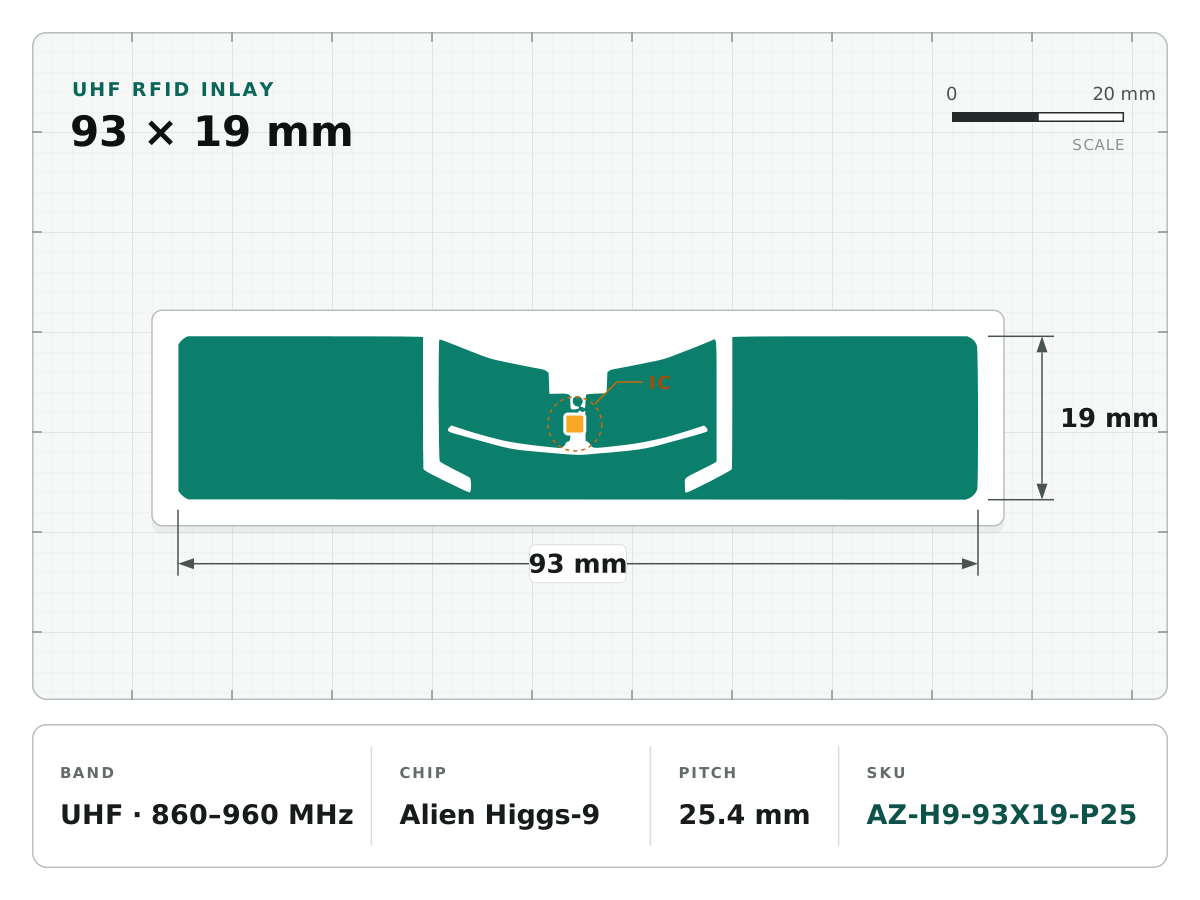 UHF
UHF AZ-H9-93X19-P25
Higgs-9 UHF RFID Inlay, 93 × 19 mm, 25.4 mm pitch
- Chip
- Alien Higgs-9
- Antenna size
- 93 × 19 mm
- Read range
- up to 14 m (lab reference, fixed reader)
 UHF
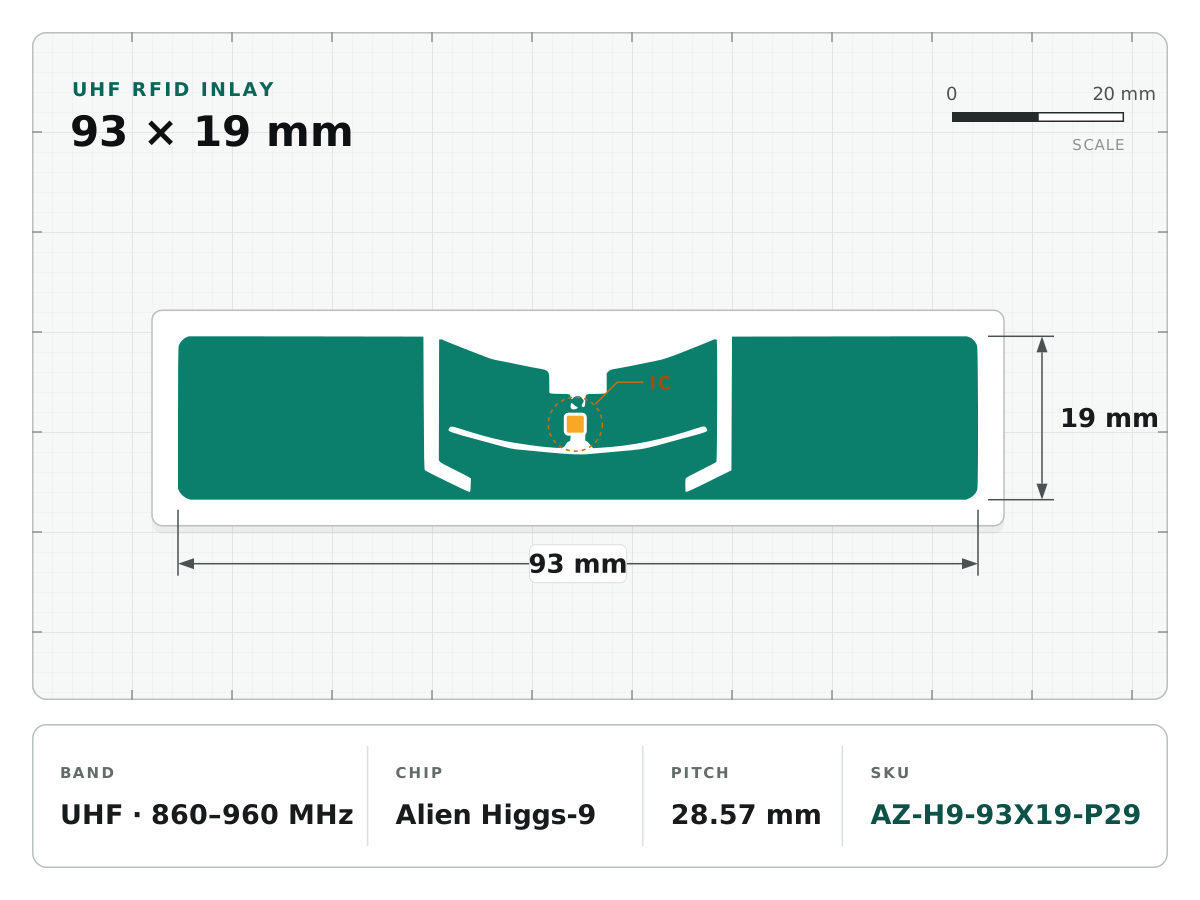
UHF AZ-H9-93X19-P29
Higgs-9 UHF RFID Inlay, 93 × 19 mm, 28.575 mm pitch
- Chip
- Alien Higgs-9
- Antenna size
- 93 × 19 mm
- Read range
- up to 14 m (lab reference, fixed reader)
 UHF
UHF AZ-U9-60X4
UCODE 9 UHF RFID Inlay, 60 × 4 mm
- Chip
- NXP UCODE 9
- Antenna size
- 60 × 4 mm
- Read range
- up to 7.5 m (reference)
 UHF
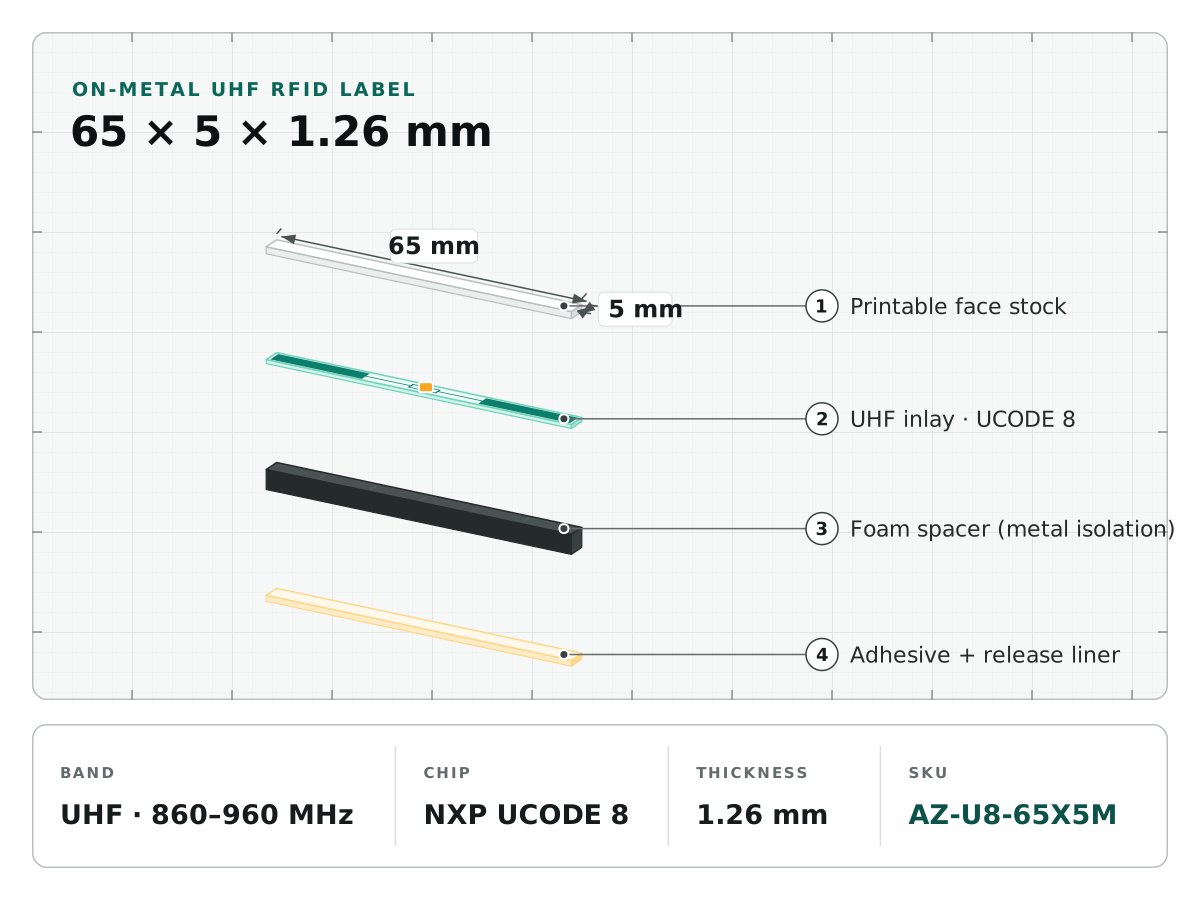
UHF AZ-U8-65X5M
UCODE 8 On-Metal RFID Tag, 65 × 5 × 1.26 mm
- Chip
- NXP UCODE 8
- Antenna size
- 65 × 5 mm
- Read range
- up to 3 m (reference)
 UHF
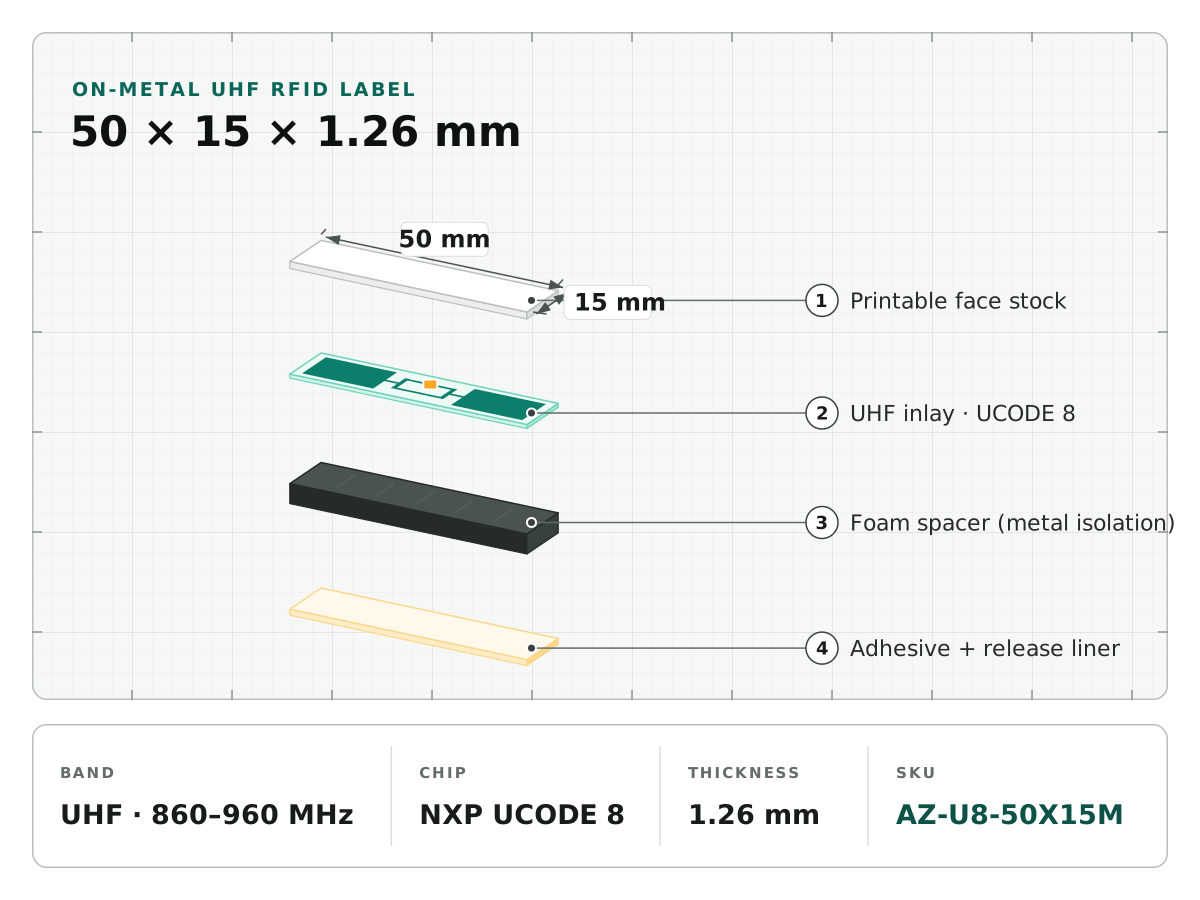
UHF AZ-U8-50X15M
UCODE 8 On-Metal RFID Tag, 50 × 15 × 1.26 mm
- Chip
- NXP UCODE 8
- Antenna size
- 50 × 15 mm
- Read range
- up to 4 m (reference)
 UHF
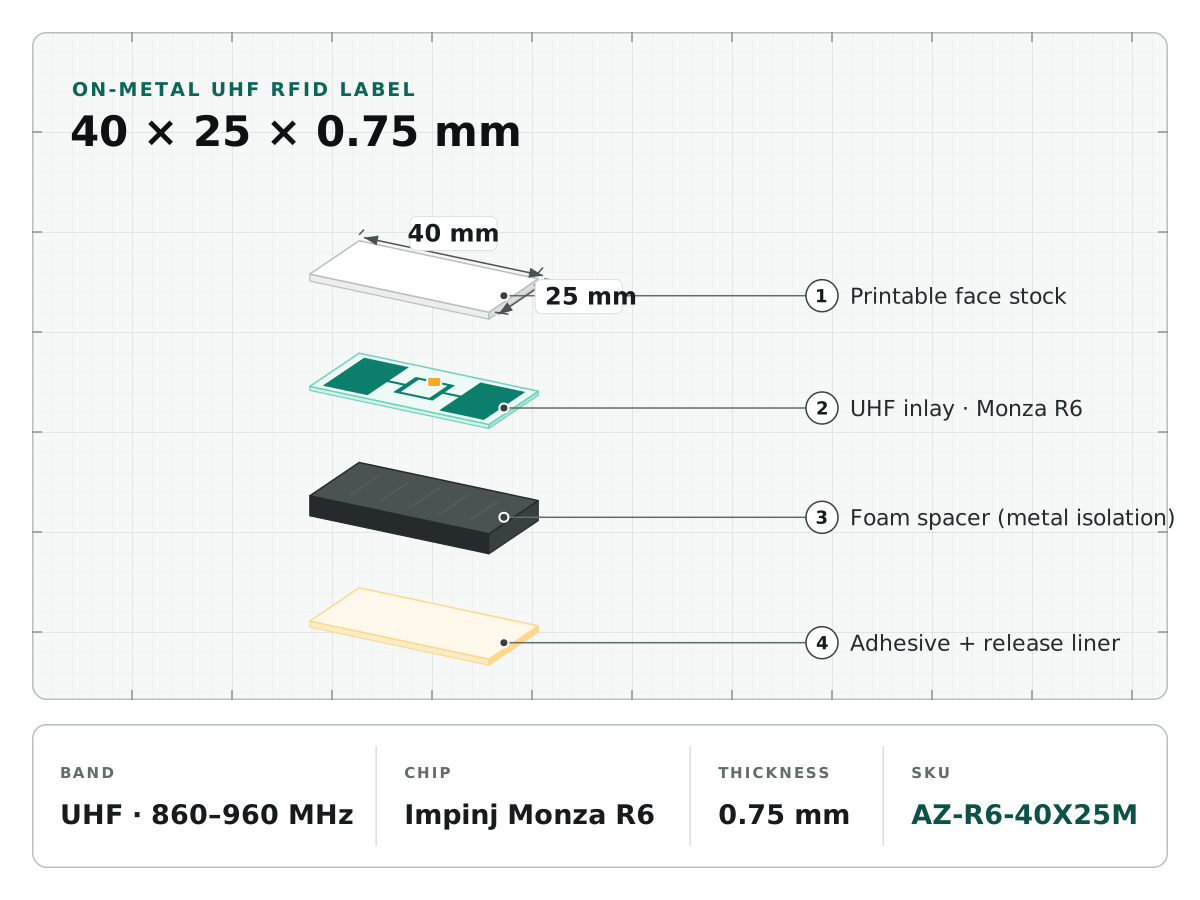
UHF AZ-R6-40X25M
Monza R6 On-Metal RFID Tag, 40 × 25 × 0.75 mm
- Chip
- Impinj Monza R6
- Antenna size
- 40 × 25 mm
- Read range
- up to 3 m (reference)
 UHF
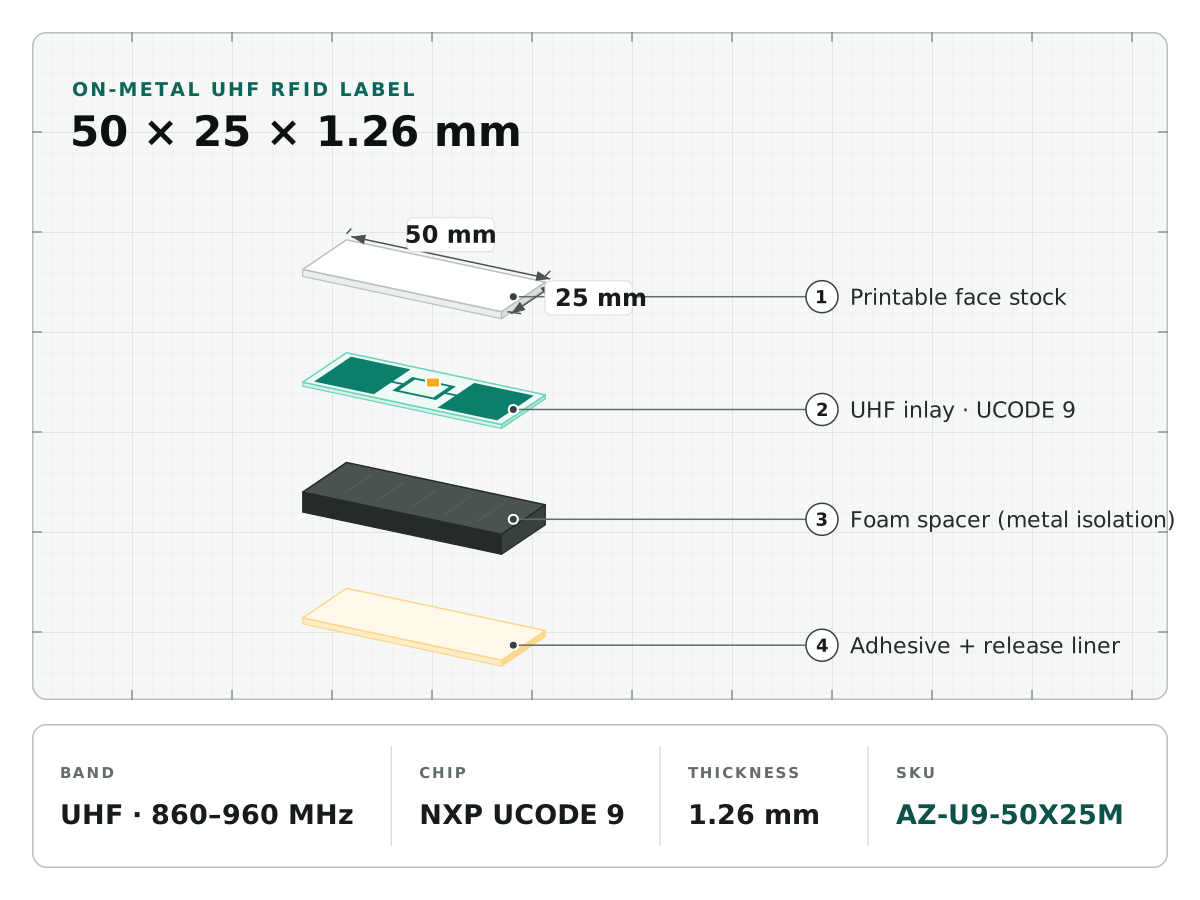
UHF AZ-U9-50X25M
UCODE 9 On-Metal RFID Tag, 50 × 25 × 1.26 mm
- Chip
- NXP UCODE 9
- Antenna size
- 50 × 25 mm
- Read range
- up to 5 m (reference)
 UHF
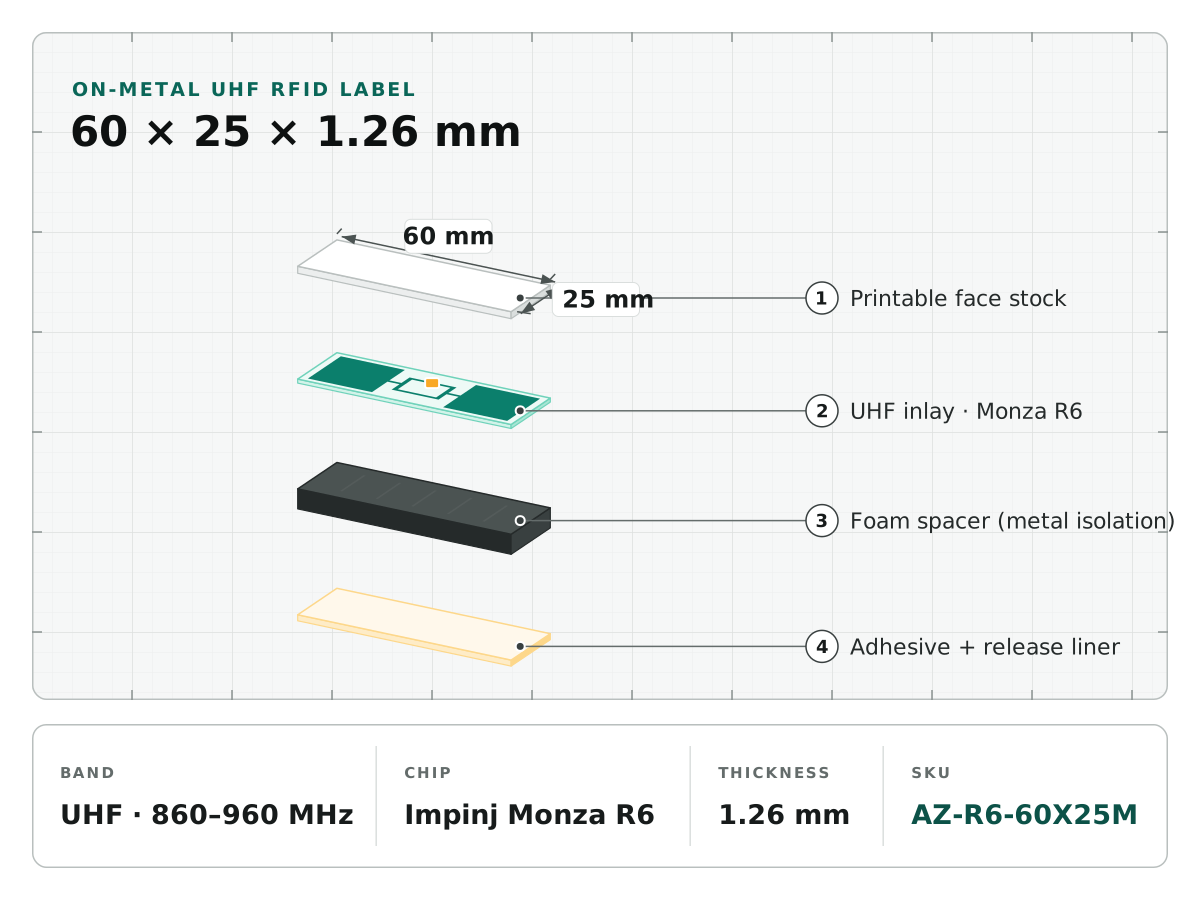
UHF AZ-R6-60X25M
Monza R6 On-Metal RFID Tag, 60 × 25 × 1.26 mm
- Chip
- Impinj Monza R6
- Antenna size
- 60 × 25 mm
- Read range
- up to 4 m (reference)
 UHF
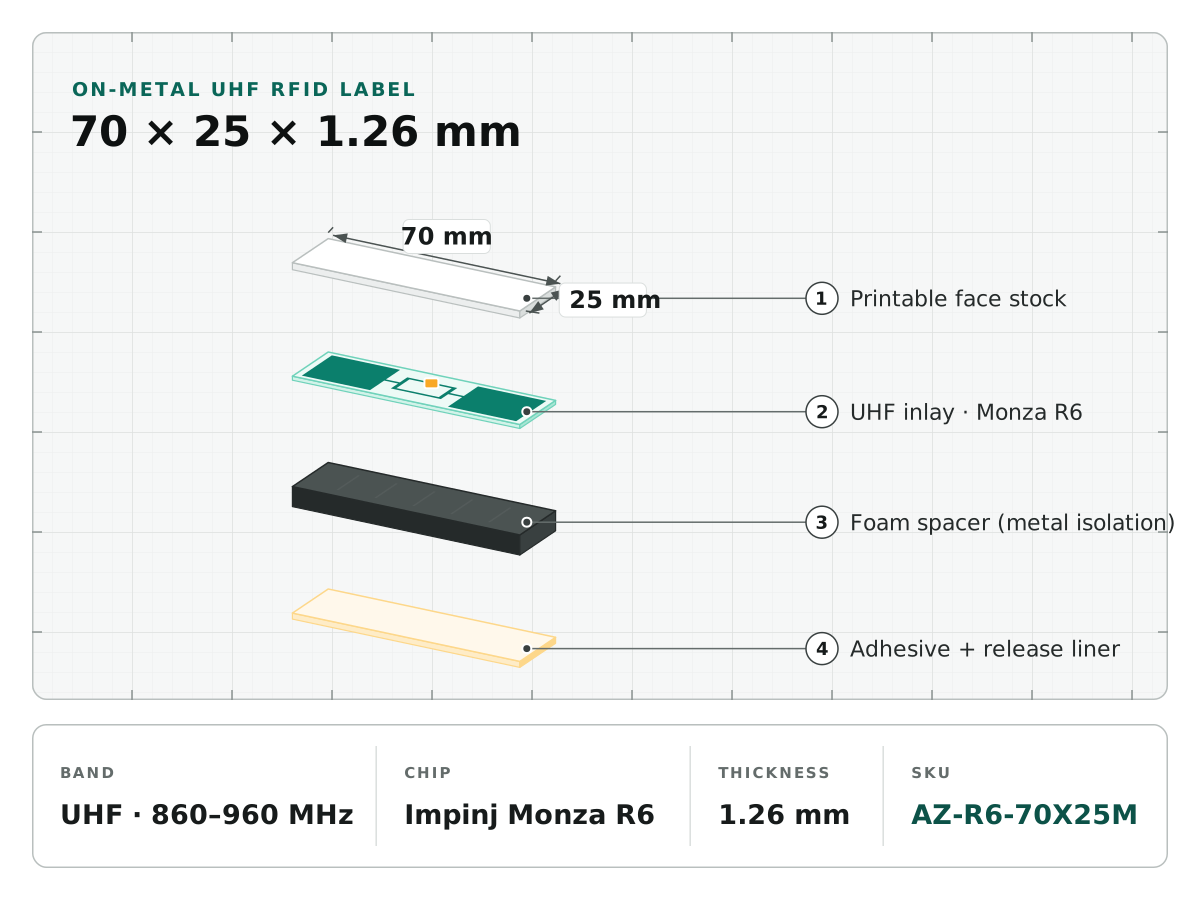
UHF AZ-R6-70X25M
Monza R6 On-Metal RFID Tag, 70 × 25 × 1.26 mm
- Chip
- Impinj Monza R6
- Antenna size
- 70 × 25 mm
- Read range
- up to 4 m (reference)
 UHF
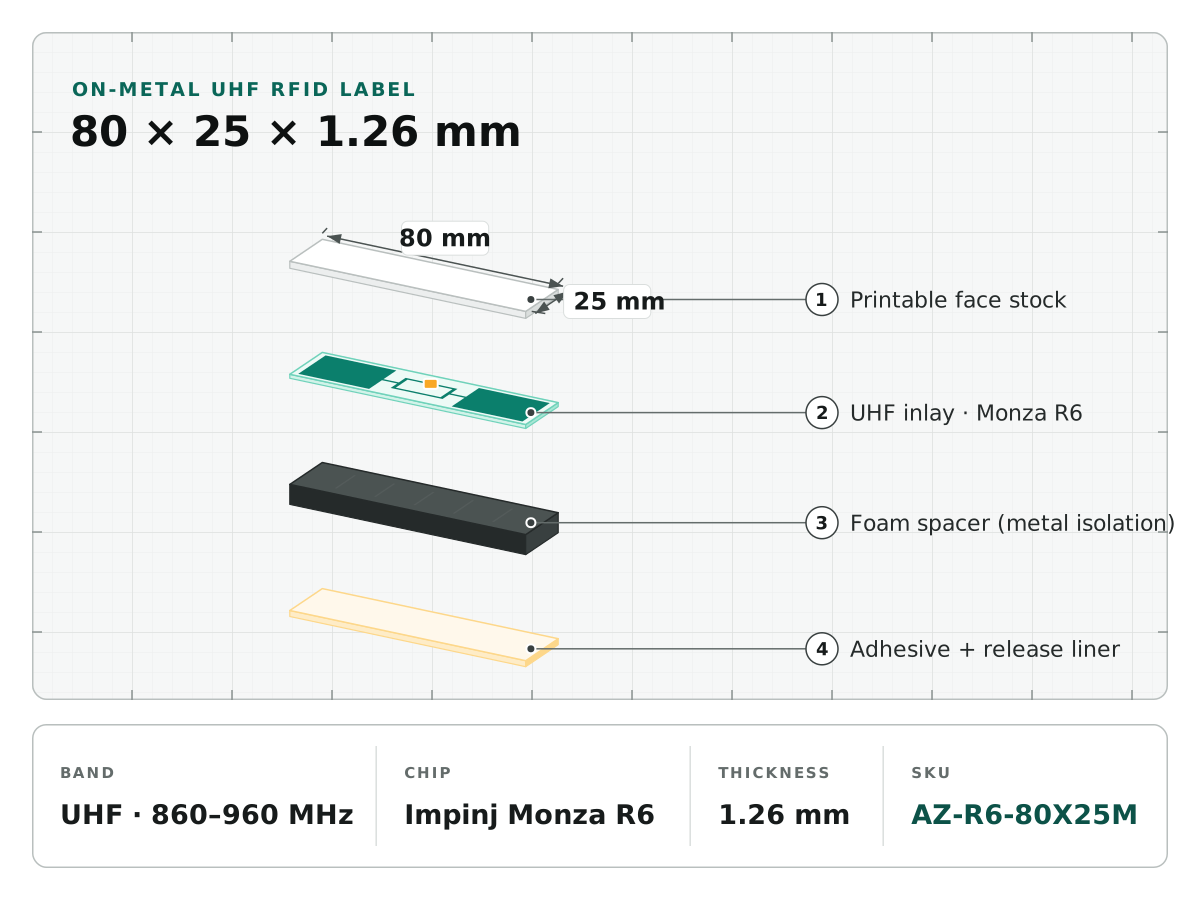
UHF AZ-R6-80X25M
Monza R6 On-Metal RFID Tag, 80 × 25 × 1.26 mm
- Chip
- Impinj Monza R6
- Antenna size
- 80 × 25 mm
- Read range
- up to 6 m (reference)
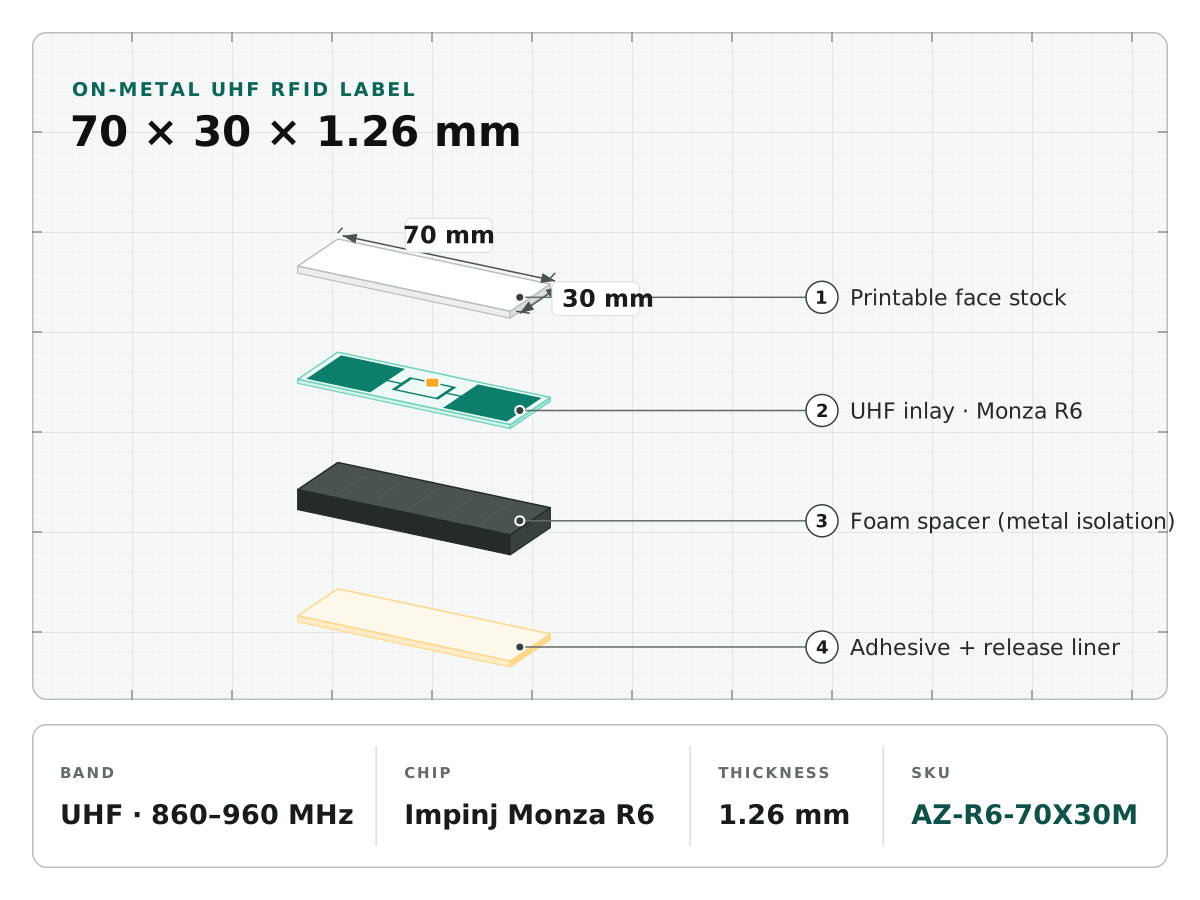 UHF
UHF AZ-R6-70X30M
Monza R6 On-Metal RFID Tag, 70 × 30 × 1.26 mm
- Chip
- Impinj Monza R6
- Antenna size
- 70 × 30 mm
- Read range
- up to 4 m (reference)
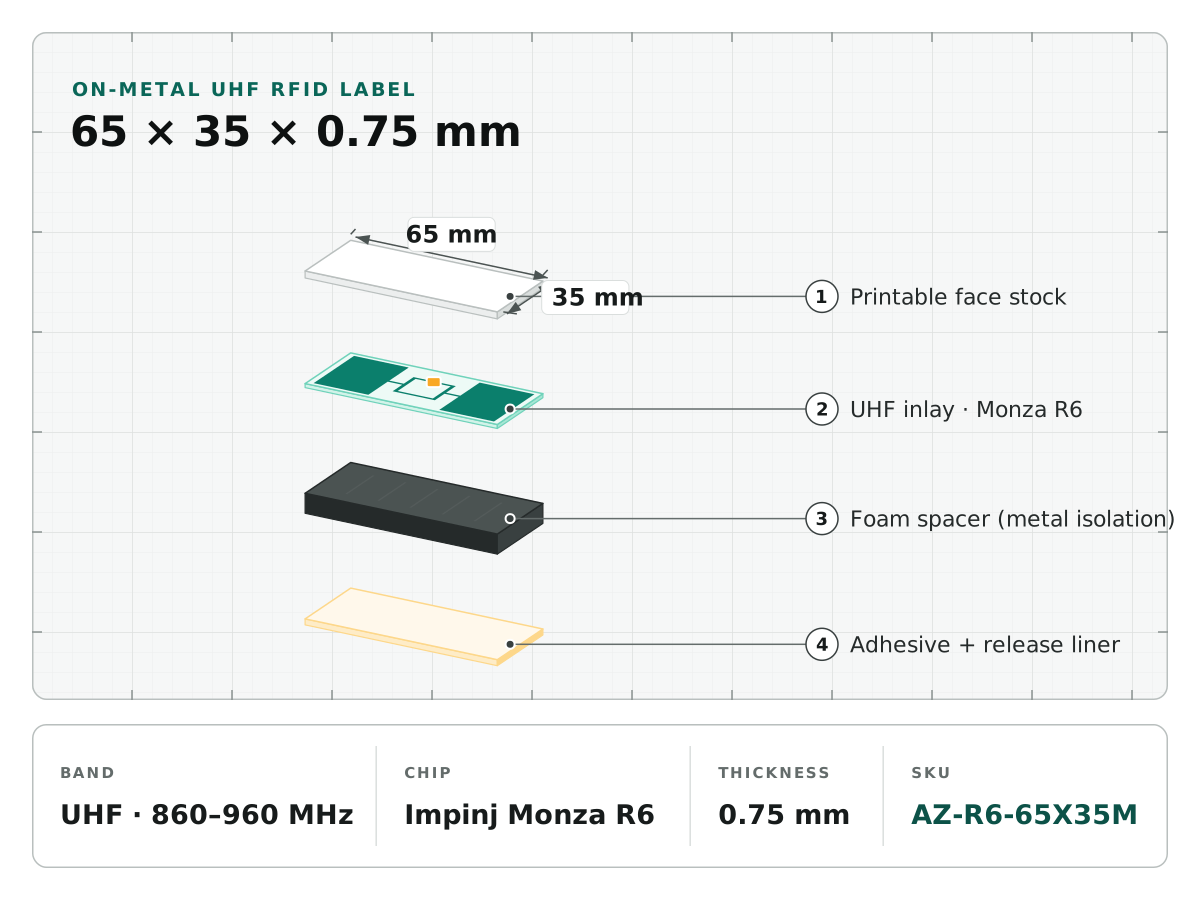 UHF
UHF AZ-R6-65X35M
Monza R6 On-Metal RFID Tag, 65 × 35 × 0.75 mm
- Chip
- Impinj Monza R6
- Antenna size
- 65 × 35 mm
- Read range
- up to 4 m (reference)
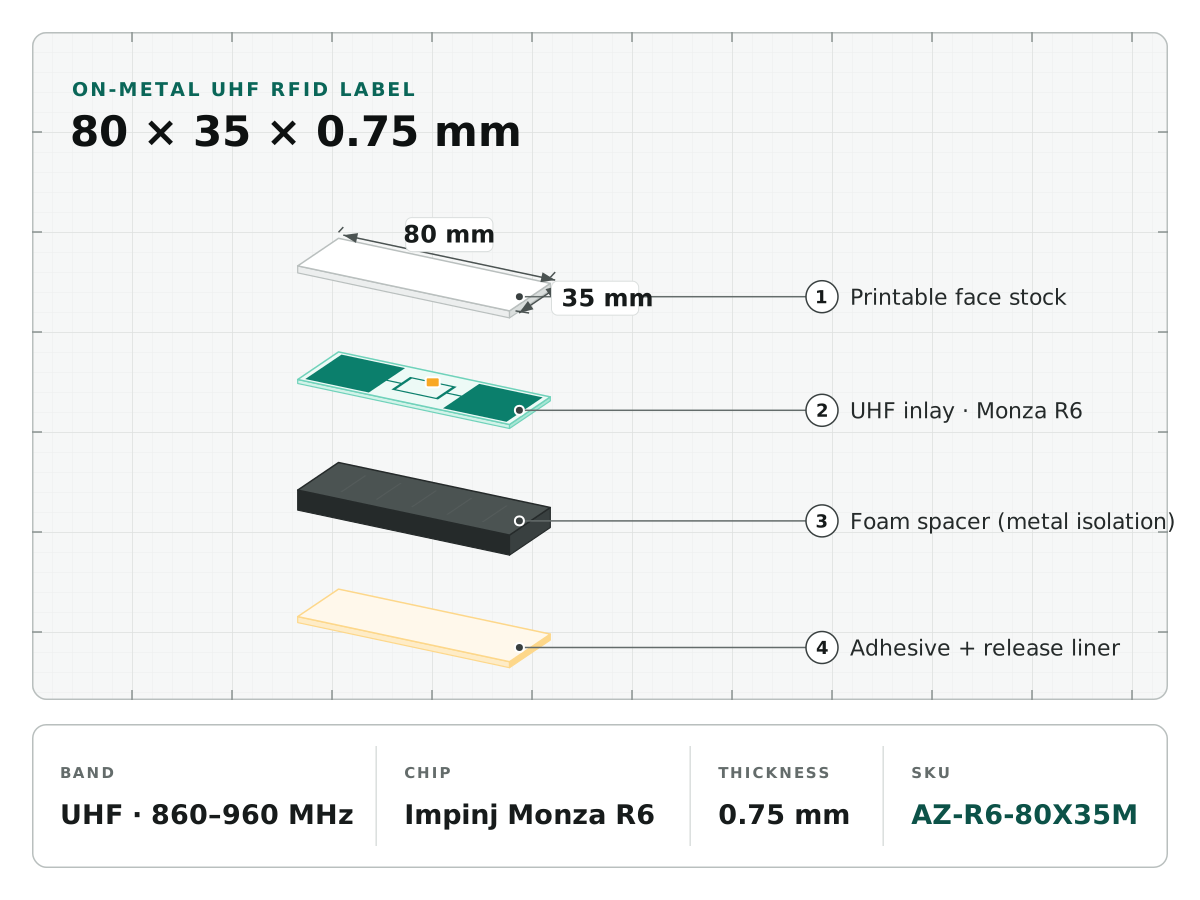 UHF
UHF AZ-R6-80X35M
Monza R6 On-Metal RFID Tag, 80 × 35 × 0.75 mm
- Chip
- Impinj Monza R6
- Antenna size
- 80 × 35 mm
- Read range
- up to 4 m (reference)
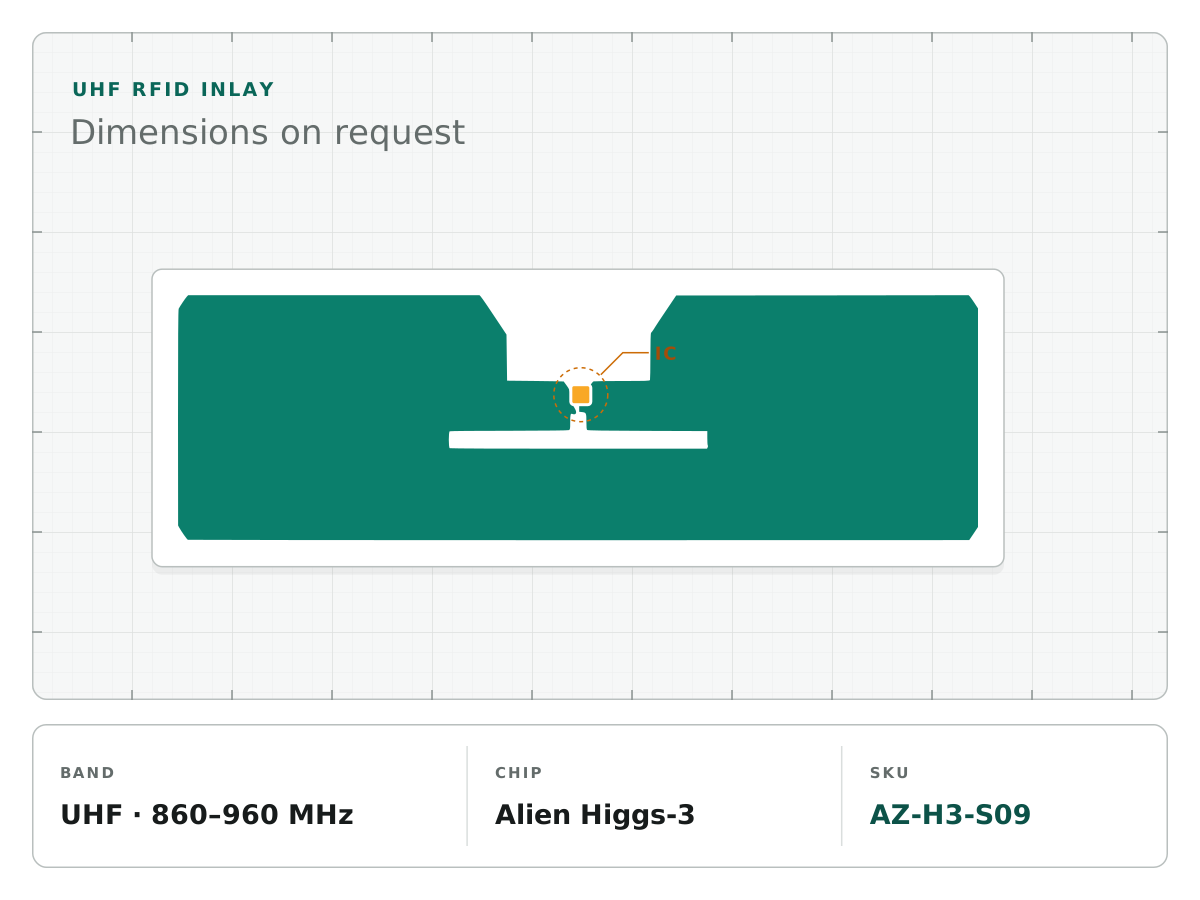 UHF
UHF 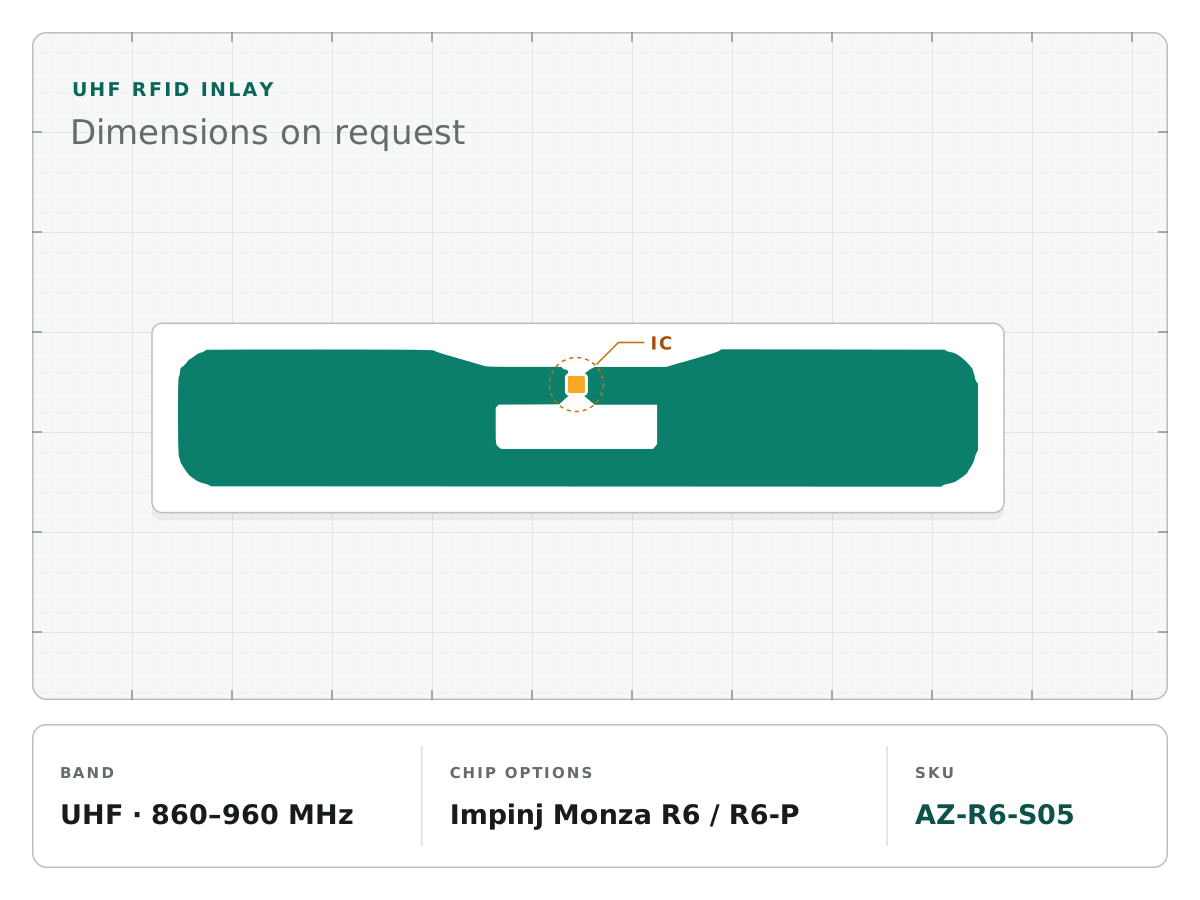 UHF
UHF AZ-R6-S05
Monza R6 / R6-P UHF RFID Inlay, AZ-R6-S05
- Chip options
- Monza R6 / Monza R6-P
- Antenna size
- On request
 UHF
UHF How ordering works
- 01
Specify
Share surface, read distance, chip preference and volume. We shortlist tags that fit.
- 02
Sample
Receive sample tags of the shortlisted designs to try in your own setup.
- 03
Validate
Test on your items, readers and printers. We adjust chip, size or format if needed.
- 04
Produce & ship
Volume production with 100% inline electrical test, then export shipping.
Frequently asked questions
Can tags survive paint-shop or e-coat temperatures?
High-temperature paint-shop cycles need specialised tag constructions beyond standard labels and on-metal tags. Give us the exact temperature profile and we tell you honestly whether we can supply a fit, or suggest placing the read point outside that process.
What should we tag first for the fastest payback?
Usually carriers and fixtures: they are finite, reused and metal, so one on-metal tag per asset gives automatic WIP tracking and fixture audits without tagging every component.
Can process data be written to the tag?
Yes, with a user-memory chip: Alien Higgs-9 offers up to 688 bits and Higgs-3 512 bits of user memory. Chips without user memory, such as UCODE 9 or Monza R6, store only the EPC.
Can you match our existing part-numbering scheme?
Yes. We encode EPCs to your scheme (or help you define one), lock memory as required and verify before shipment.
Further engineering reading
- How RFID Tags Are Made: From Inlay to Accepted Label
Follow the steps from antenna and chip bonding to conversion, encoding and quality checks. Know which evidence to request when buying RFID labels.
- On-Metal RFID Tags: Construction, Placement and Testing
Choose an on-metal RFID label by mounting surface, available area, thickness and reader workflow. Test the complete structure before approving bulk supply.
- UCODE, Monza and Higgs: Compare UHF RFID Chips
Compare UHF chip memory, reader features and lifecycle support. Use official datasheets to shortlist chips, then test the complete inlay on your items.
- RFID Read Range: What Changes the Result in Your Site
RFID read range depends on the complete system. Control power, antenna, surface, orientation and reader settings when comparing labels on real objects.
Talk to an RFID engineer
Planning line or container traceability?
Tell us what you want to tag, the surface and the process conditions. An engineer replies within 24 hours with a shortlist and a pilot plan.
Email us: sales@antenza.com