A chip family name is not a complete specification. The exact variant decides memory layout and feature support; the antenna decides how that chip works on your object. Ask suppliers to identify both rather than quoting “UCODE or equivalent.”
Compare functions before sensitivity
| Buyer question | What to request |
|---|---|
| Will the EPC encoding fit? | Usable EPC bits for the exact variant |
| Is offline data required? | User-memory capacity and write policy |
| Is rapid TID reading used? | Reader and firmware support for the feature |
| Is consumer privacy required? | Exact mode, access procedure and recovery process |
| Is the design expected to last? | Lifecycle status and qualified replacement plan |
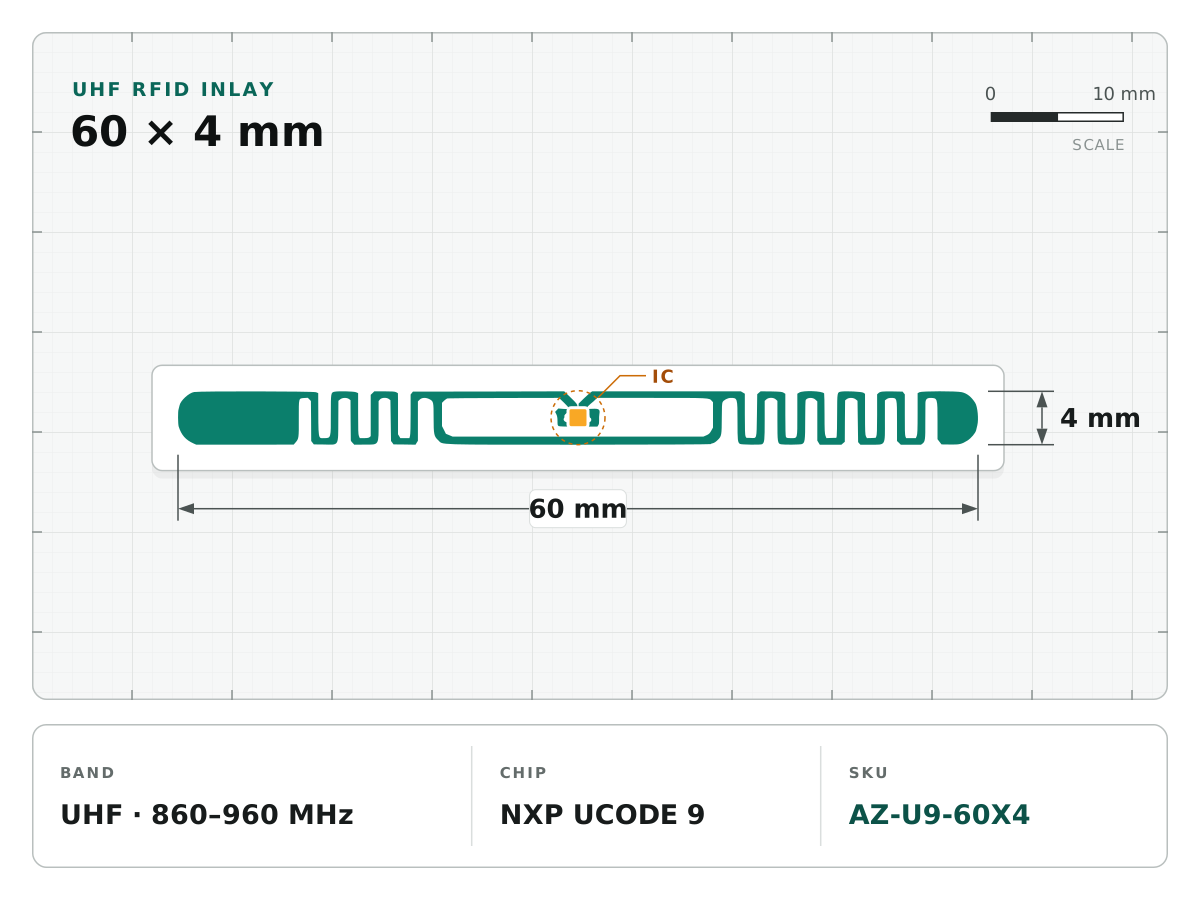
NXP UCODE 9 is an identity-oriented option with a 96-bit EPC area and no user memory. Impinj’s M700 family includes several variants; do not transfer the memory or security capabilities of one variant to another. Alien Higgs variants also differ. The linked official documents are the starting point for a signed purchase specification.
Treat sensitivity as one input
A bare-chip sensitivity figure describes a chip under specified conditions. It is not the reading distance of a converted label. When comparing two samples, keep the antenna footprint, reader region, power, mounting surface and orientation controlled. A larger or better-tuned antenna may change the result more than the chip difference.
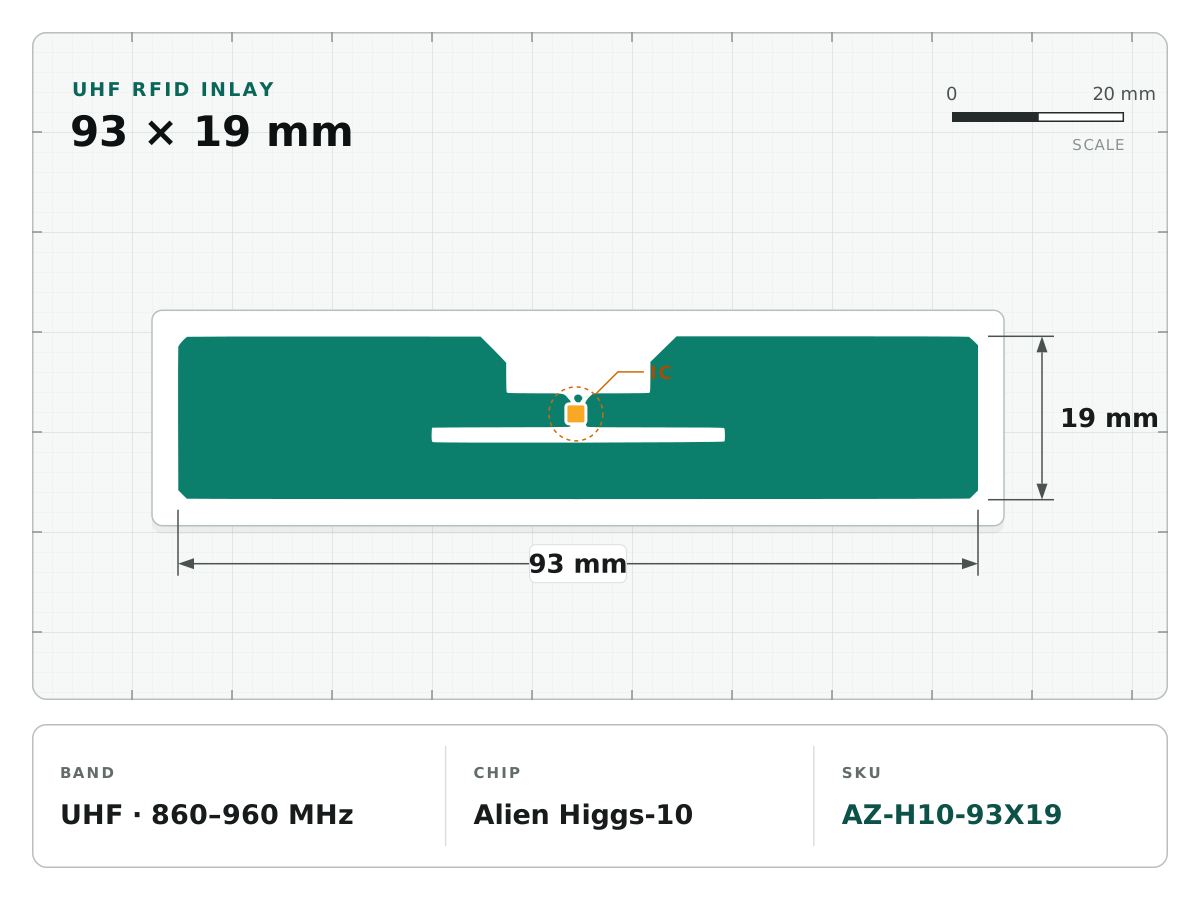
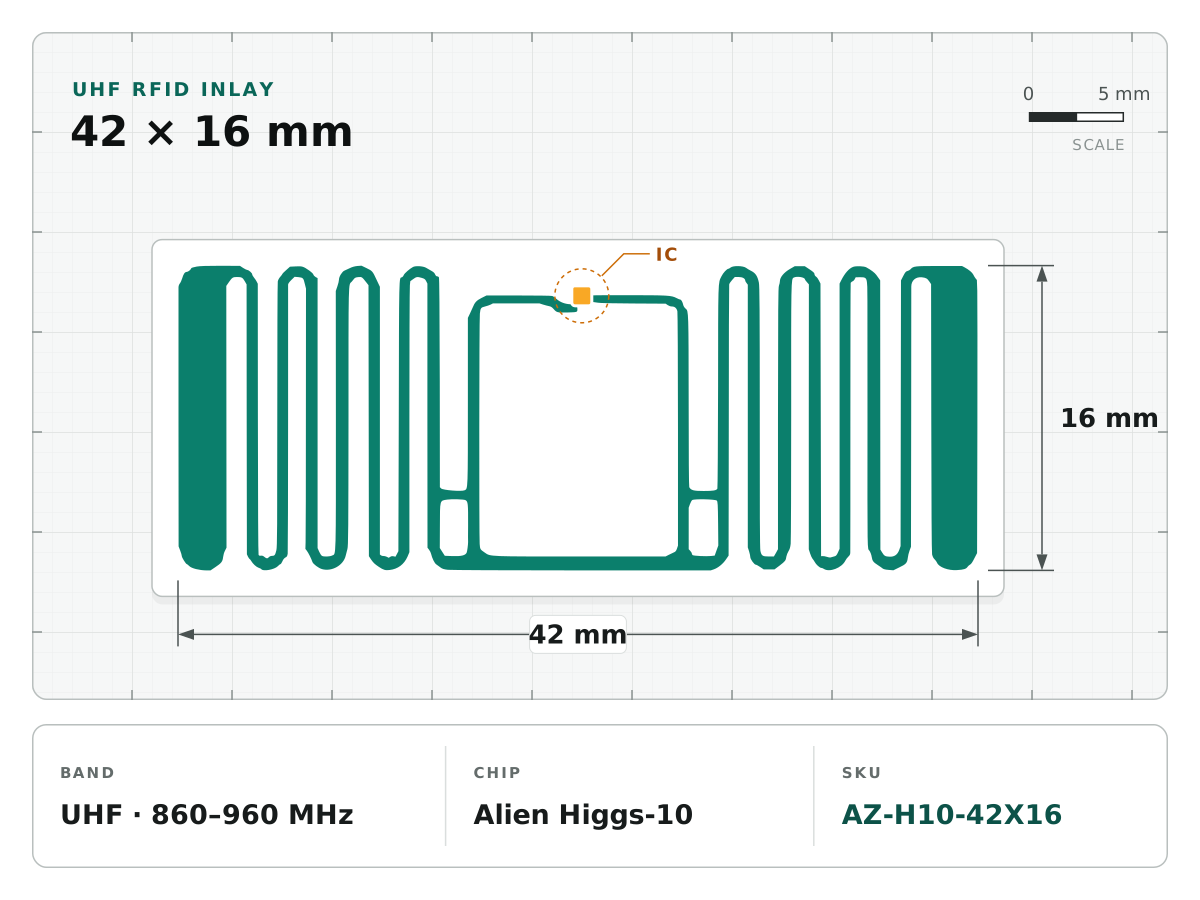
Use UHF inlays to compare finished combinations. For a metal asset, move to on-metal labels rather than trying to rescue an ordinary label by selecting a more sensitive chip.
Keep identity, privacy and authentication distinct
An EPC can carry your item identity. A serialized TID can support manufacturing traceability and consistency checks. Locking limits later writes. A privacy mode limits visibility. None of these descriptions, by itself, promises resistance to an attacker who copies data or emulates a tag. A security project needs an explicit threat model, supported chip capability and verification service.
Check lifecycle before fixing the artwork
As checked on October 1, 2026, Impinj’s R6-P page labels that device as not recommended for new designs. Confirm the exact chip’s supply status at quotation and before a repeat order. A substitute chip can require fresh encoding, RF and printer validation even if the tag dimensions stay unchanged.
Send your encoding scheme, required memory, reader models and expected rollout period through the engineering inquiry form. Antenza can shortlist chip-and-antenna combinations for comparative sample testing.