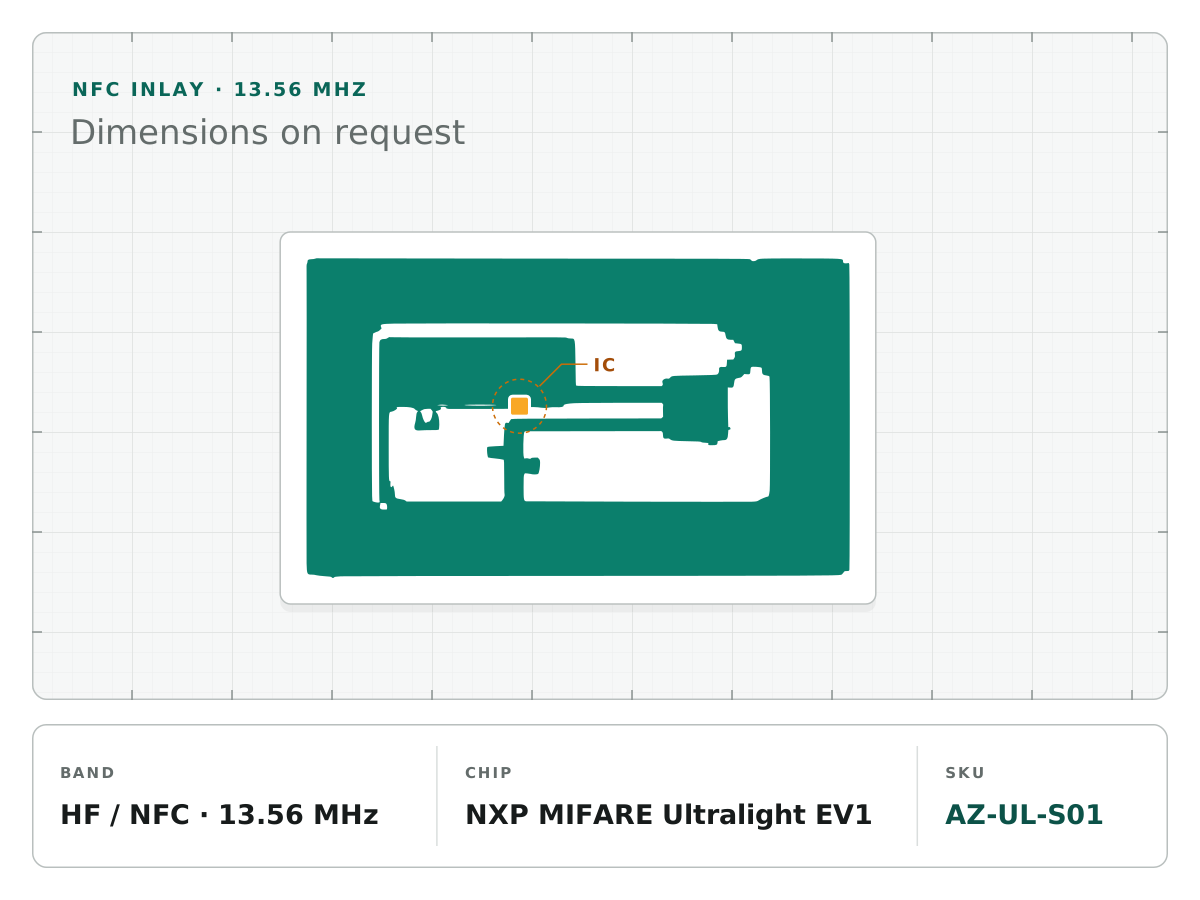
 HF / NFC
AZ-UL-S01
MIFARE Ultralight EV1 NFC Tag, AZ-UL-S01
- Chip
- NXP MIFARE Ultralight EV1
- Antenna size
- On request
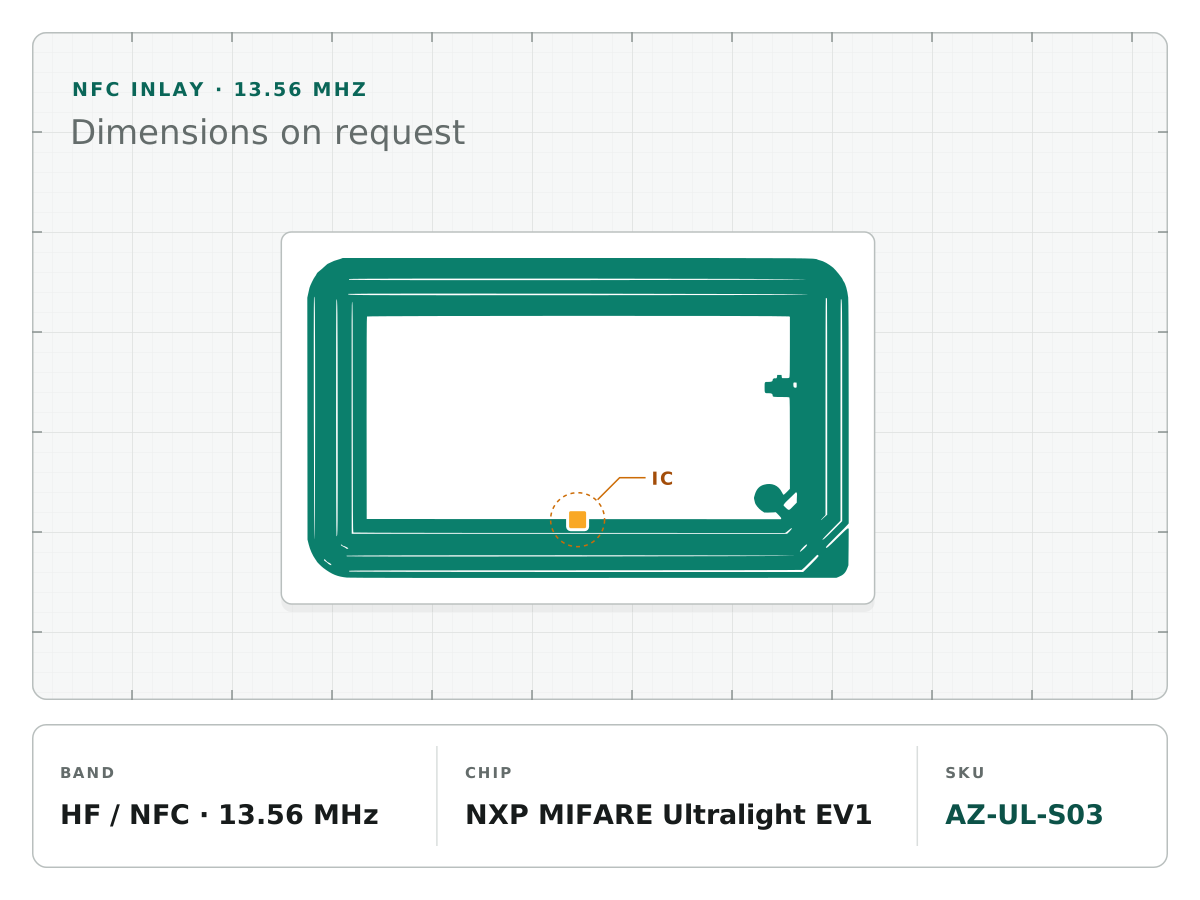
AZ-UL-S03
MIFARE Ultralight EV1 NFC tag; validate the complete message and expected action on the target phone, OS and application. Supplied as dry inlay, wet inlay (sticker) or printed label.
Full dimensions for this design are available on request. Ask for the specification and samples before ordering. Request specifications
Validate samples first. Engineer reply within 24 h.
See the sample validation checklist
| SKU | AZ-UL-S03 |
|---|---|
| Frequency | HF 13.56 MHz (NFC) |
| Protocol | ISO/IEC 14443-A, NFC Forum Type 2 |
| Chip | NXP MIFARE Ultralight EV1 |
| Memory | 48-byte (MF0UL11) or 128-byte (MF0UL21) user memory, 7-byte UID |
| Antenna size | On request |
| Format | Inlay (dry / wet / label) |
MIFARE Ultralight EV1 NFC Tag, AZ-UL-S03 is a 13.56 MHz NFC tag with the NXP MIFARE Ultralight EV1 chip on an HF coil antenna, following ISO/IEC 14443-A, NFC Forum Type 2. Check the target phone, OS and application for protocol and NDEF record support. Read back the complete message from rewritable samples on the actual item and verify the expected action for product information or marketing links. A static URL alone does not prove product authenticity.
NXP MIFARE Ultralight EV1 provides 48-byte (MF0UL11) or 128-byte (MF0UL21) user memory, 7-byte UID. It follows ISO/IEC 14443-A, NFC Forum Type 2. Datasheet highlights: three independent 24-bit one-way counters, 32-bit password protection, ECC originality signature and a 32-bit OTP area.
Full dimensions for this design are available on request. Reading performance depends on the reader antenna, tag antenna size and surrounding material. Read back the complete sample content on the actual item with the intended equipment to confirm that the configuration meets the workflow.
Whether it fits depends on your item and reader setup; describe the use case and we will confirm if this design is a good match.
The same chip and antenna are available as dry inlay, wet inlay or label; printing, data encoding and locking and custom label sizes are quoted on request. Start with samples, then move to volume once the tag passes your tests; volume orders are produced with our ISO 9001-certified production partner and 100% electrically tested inline.
Vendor documents describe the chip, not finished-tag read range.
Confirm catalog dimensions against the final tag construction. Reference read ranges require sample testing on your item with your reader setup.
Confirm the construction and encoding during sampling, then quote the configuration you validated.
Chip and antenna on a PET carrier without adhesive, for your own converting, hang tags or lamination.
The same inlay with pressure-sensitive adhesive on a liner, applied like a NFC sticker.
Paper or synthetic face stock over the inlay, blank or printed, with data encoded and locked.
Other label sizes, face stocks, adhesives, printing, encoding and roll formats on request.
Agree the actual use conditions and pass criteria before selecting samples. The catalogue supports shortlisting; confirm finished-tag performance and delivery configuration in writing and through sample validation.
Record phone models, OS and application versions. On the final packaging, read back the longest planned complete NDEF message and check its content, destination page or expected action. Frequency or chip name alone does not confirm the phone workflow.
Check the actual chip and usable area for the format, including NDEF record and storage overhead. Reconcile item and printed IDs. Keep early samples rewritable; approve locks from the chip documentation after content validation. A static link is not product authentication.
Record the SKU, sample revision, lot, device settings, results and approver. Confirm final dimensions, materials, printing, encoding, quantity and delivery requirements, and agree which configuration changes require another trial.
Use the test record to save actual conditions and results. English and Chinese worksheets are provided; the agreed reviewer determines acceptance.
Download test recordShare surface, read distance, chip preference and volume. We shortlist tags that fit.
Receive sample tags of the shortlisted designs to try in your own setup.
Test on your items, readers and printers. We adjust chip, size or format if needed.
Volume production with 100% inline electrical test, then export shipping.
Compare NTAG213, NTAG215 and NTAG216 by actual NDEF size. Check usable memory, locking and finished-tag performance before requesting NFC label samples.
Build an NFC brand-protection brief around threats, tag security and a verification service. A copied URL or static UID is not proof of authenticity.
HF / NFC AZ-UL-S01
 HF / NFC
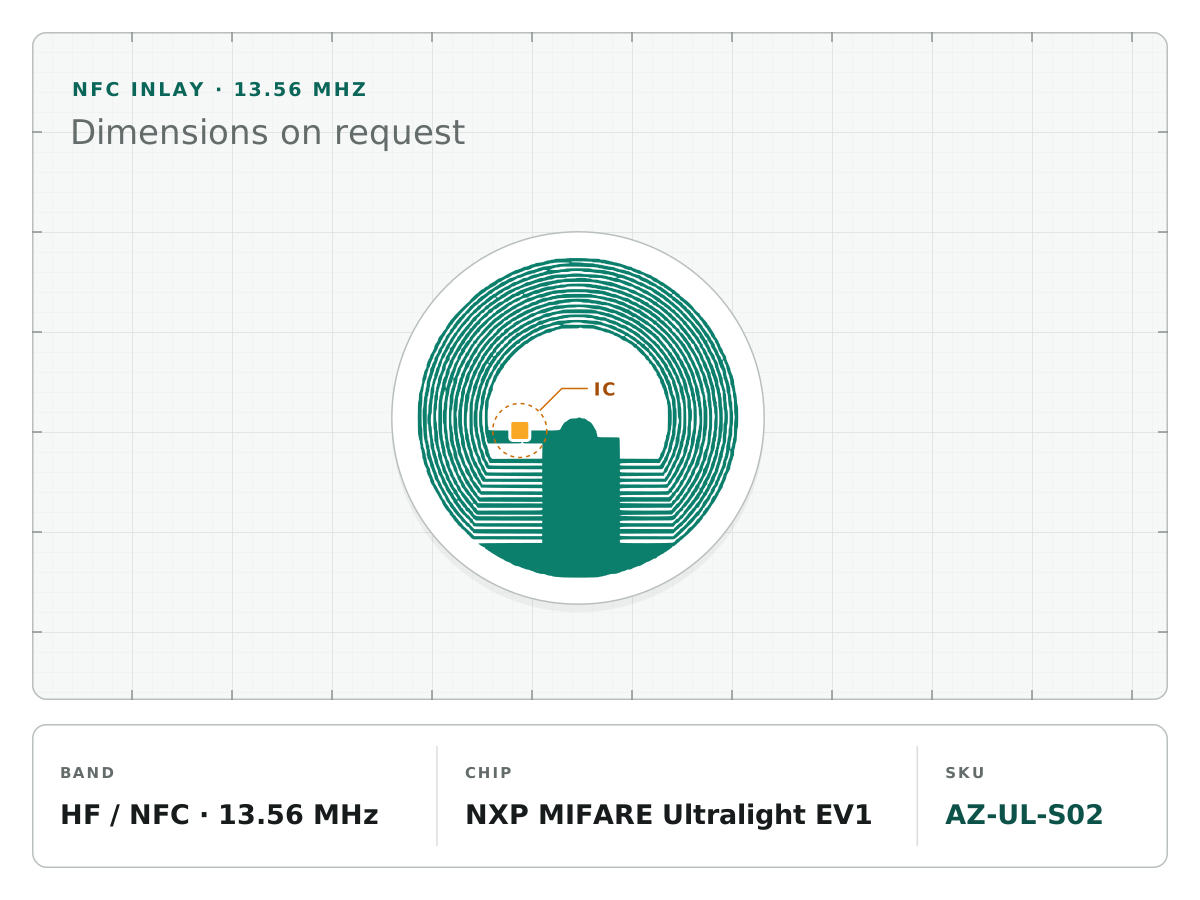
AZ-UL-S02
 HF / NFC
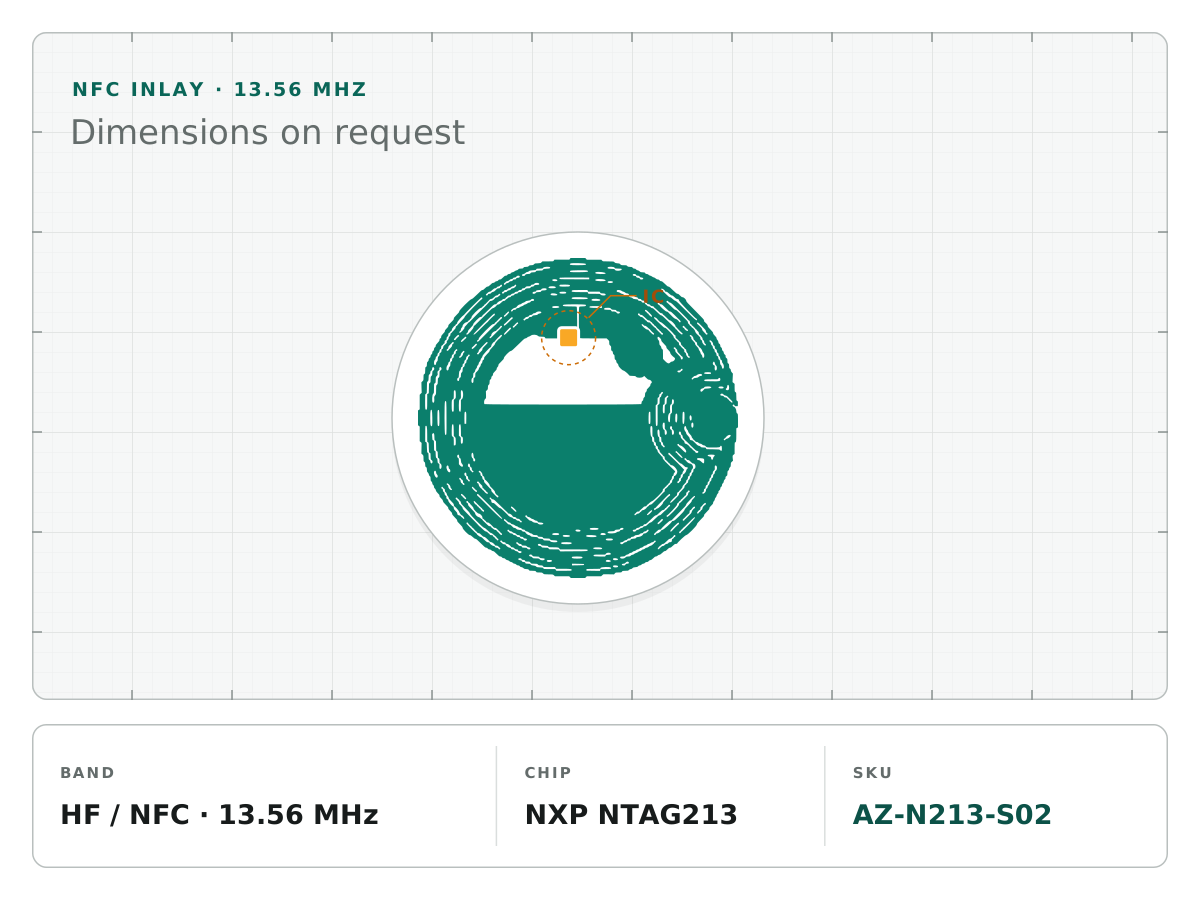 HF / NFC
Talk to an RFID engineer
Send the surface, read distance and volume. An engineer replies within 24 hours with a recommendation and a sample plan.
Email us: sales@antenza.com