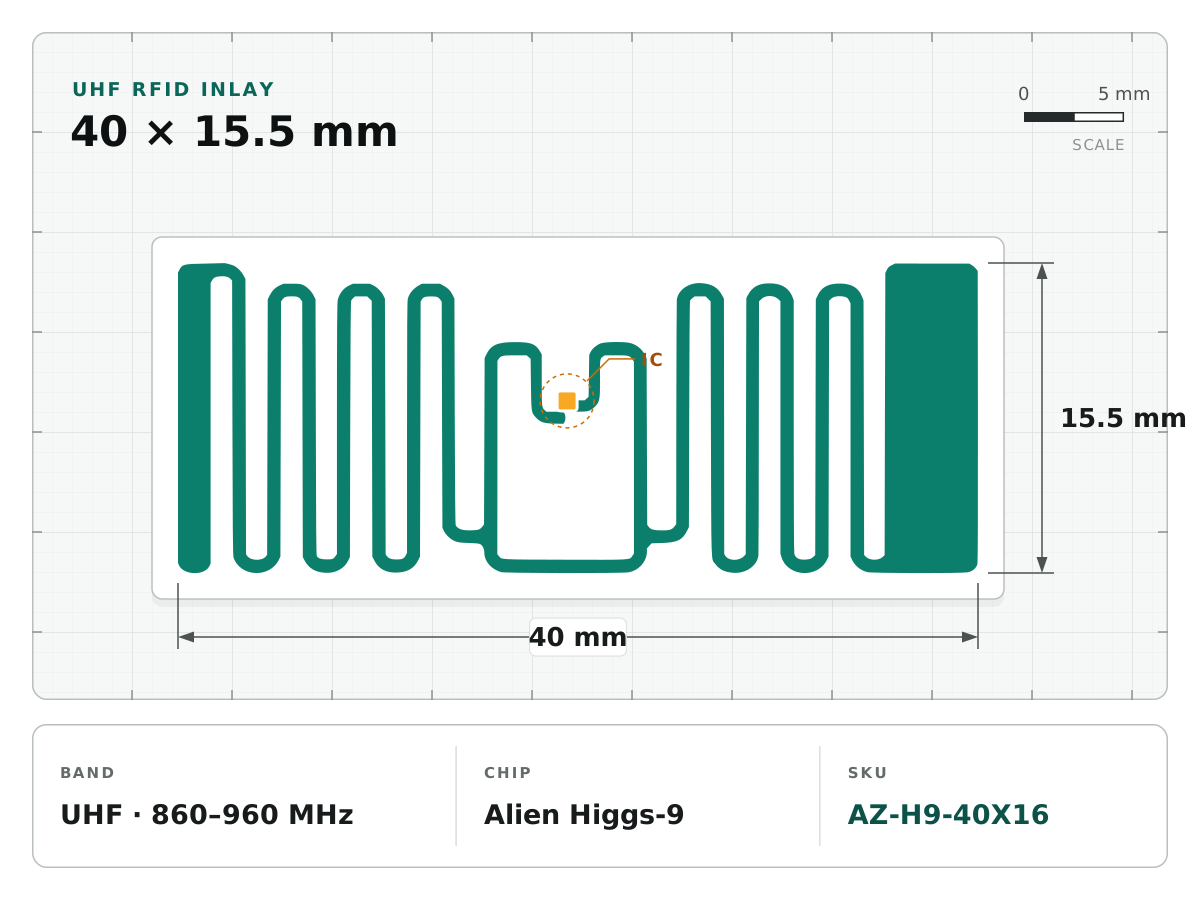
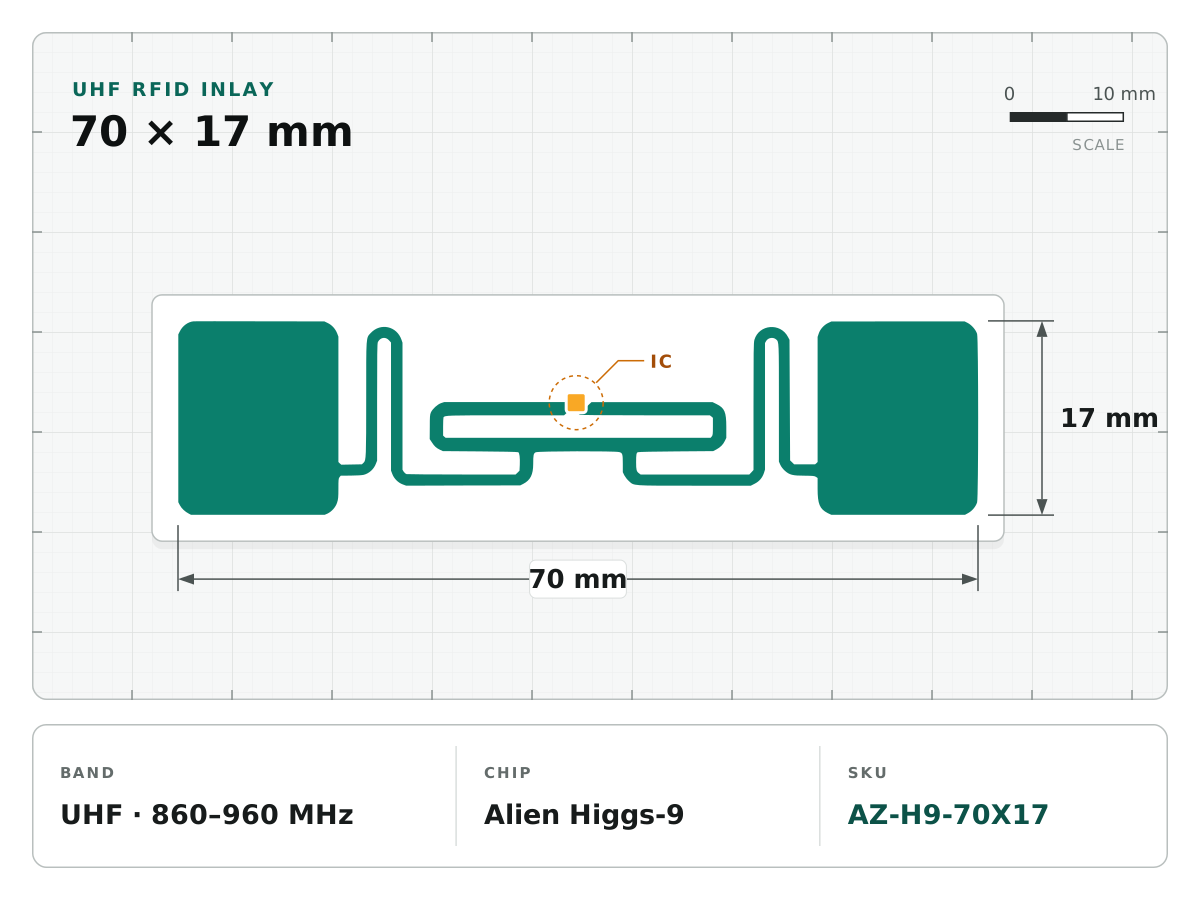
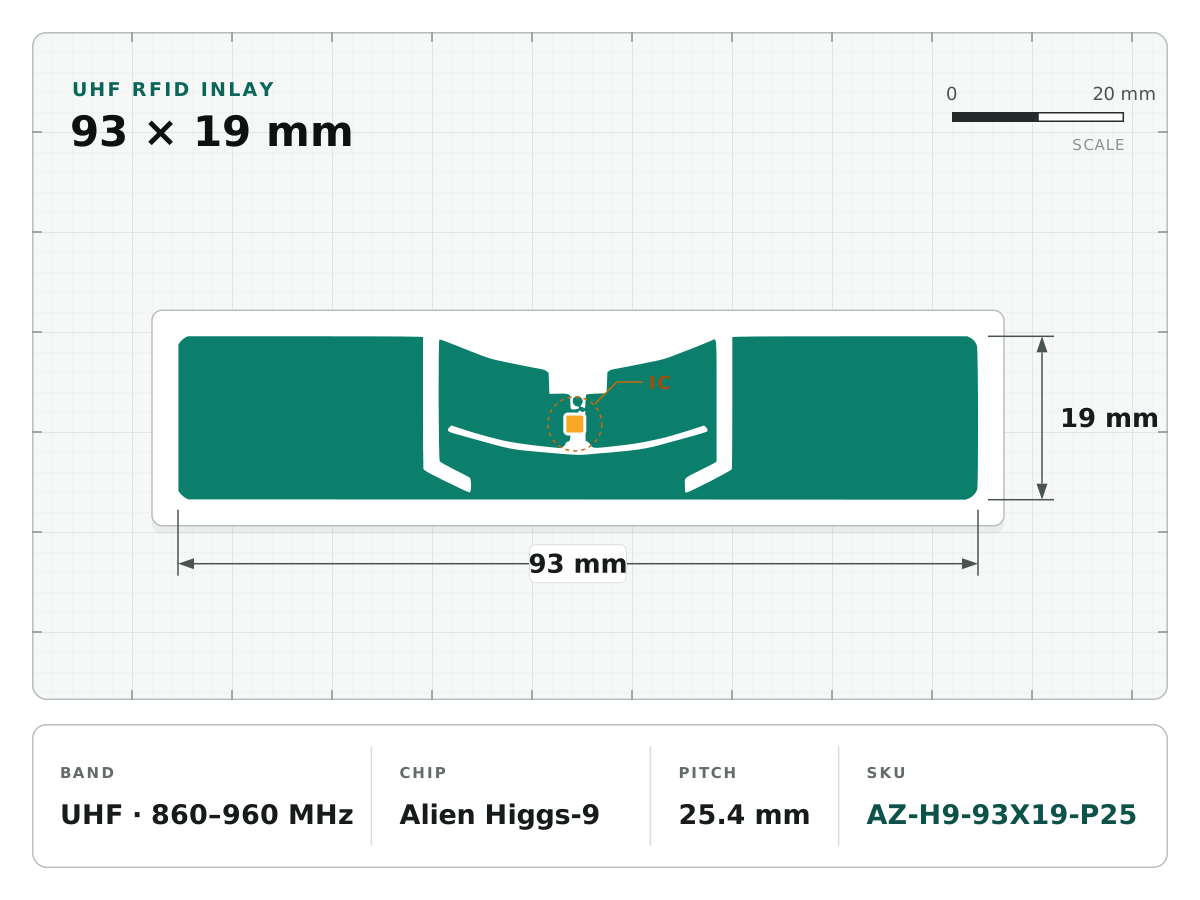
The same chip-and-antenna design can be supplied in several forms. The RF design and the delivered format are separate decisions. A low-priced dry inlay is not a ready-to-print label, and an adhesive wet inlay does not automatically fit a printer.
The four common formats
| Format | What is added | Typical buyer task |
|---|---|---|
| Dry inlay | Chip and antenna on a substrate | Integrate or convert into another product |
| Wet inlay | Adhesive and release liner | Apply directly or convert further |
| Printable label | Face stock and converted label geometry | Print, encode and apply |
| Finished tag or hang tag | Artwork, attachment format and optional encoding | Deploy at the packing line |
Terminology can vary between suppliers. Confirm a construction drawing and a physical sample rather than relying on the name alone. For dry inlays, clarify whether delivery is rolls, sheets or individual pieces and how the substrate is supported during conversion.
State both RF and mechanical dimensions
Antenna dimensions describe the conductor footprint. Finished-label dimensions describe what reaches your printer or applicator. Pitch is the distance from one repeated position to the next. It includes spacing and is not necessarily equal to label length.
Include liner width, roll core, maximum roll diameter, winding direction, gap or black mark, and inlay position within the label. A drawing with the feed direction marked prevents ambiguity about length and width.
The conversion stack can affect RF behavior
Face stock, adhesive, overlaminate and the eventual item form the operating environment. Test a finished sample on the real object. A successful bare-inlay trial is useful for screening, but final conversion may shift the result.
Start with UHF inlays and labels for inventory workflows or NFC and HF tags for supported near-field workflows. A standard wet inlay applied directly to metal is not a substitute for a qualified on-metal structure.
Clarify who owns serialization
If the supplier encodes, provide the data scheme, serial allocation, duplicate policy and read-back report requirements. If you encode locally, request blank delivery and qualify the printer or encoding station. Decide when locking occurs and who approves it; some locking actions cannot be reversed.
A purchase specification that avoids surprises
Write: exact chip and antenna; dry/wet/label form; antenna and finished dimensions; adhesive and face stock; roll drawing; printing; encoding and verification; quantity and acceptance procedure. Share this through the RFQ form. Antenza can help separate the RF shortlist from conversion requirements before a sample roll is made.