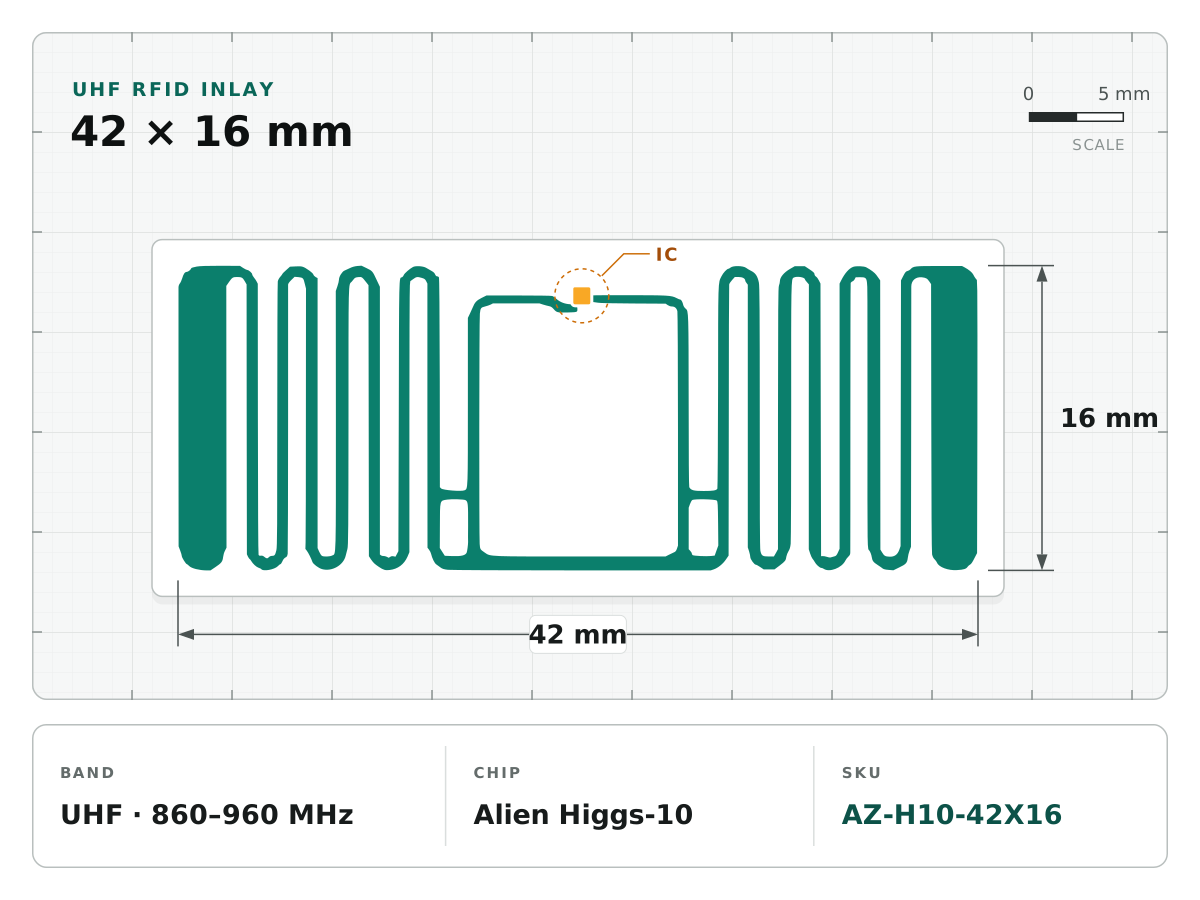
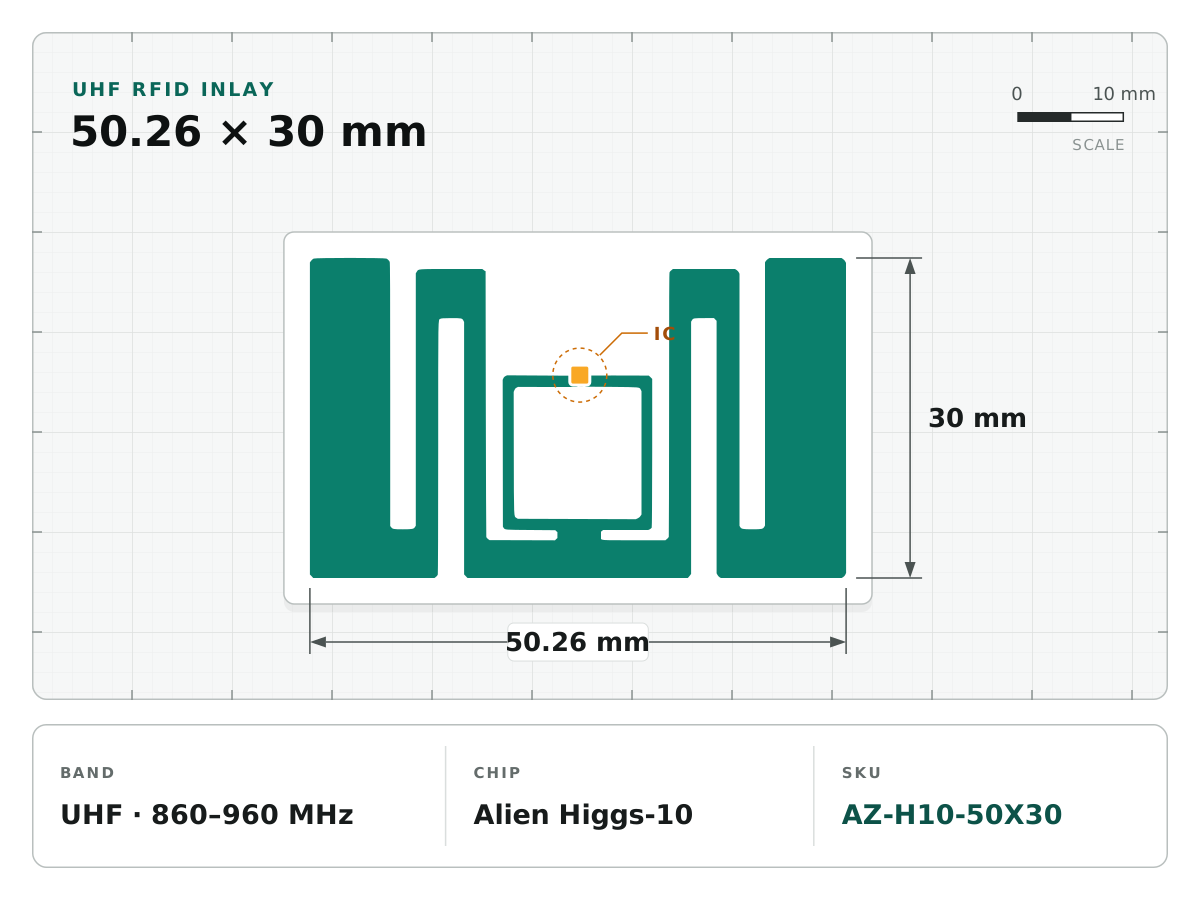
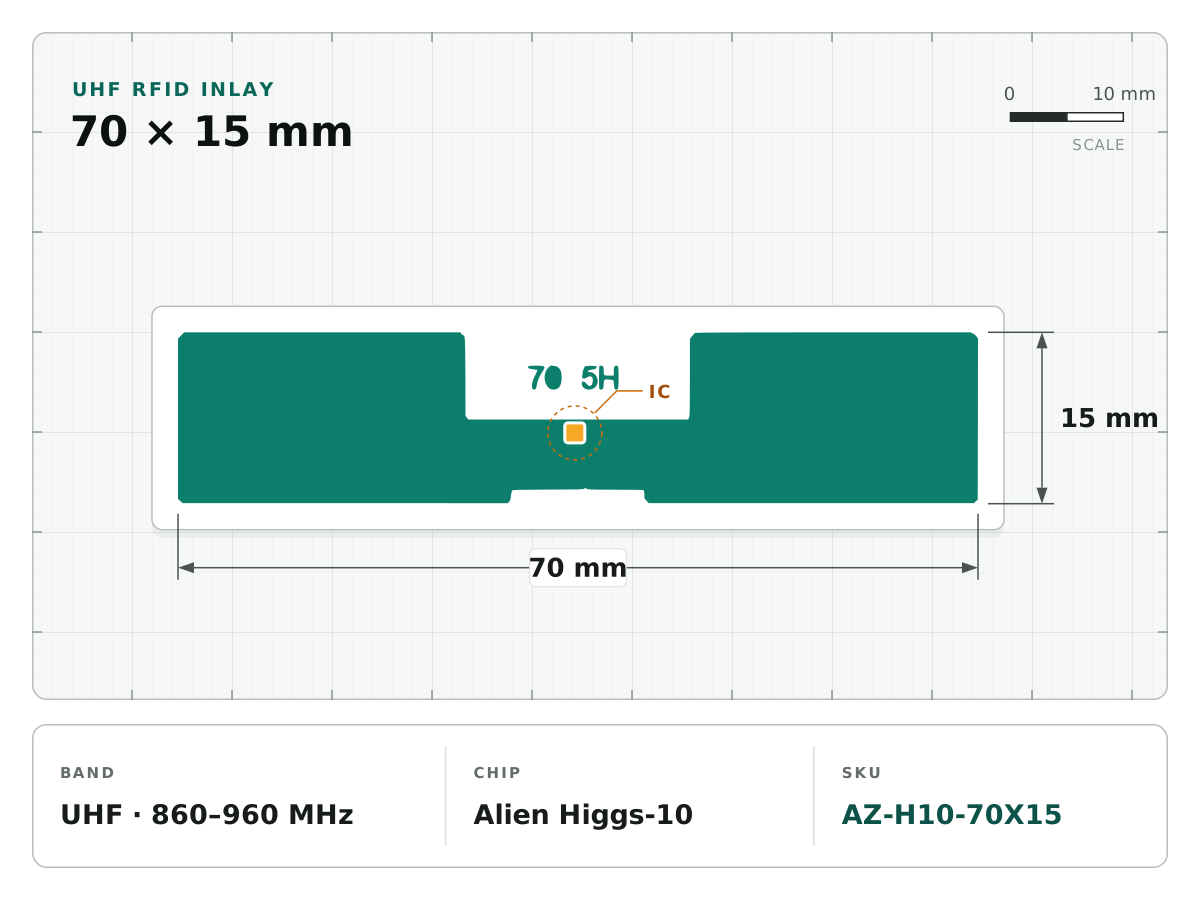
A price per tag is meaningful only when the tag is defined. Two quotations can use the same chip name but supply different face stock, adhesive, encoding, roll geometry and inspection evidence. Compare the cost of tags ready for your workflow, not an undefined unit.
This guide gives a budgeting method rather than an unverified market price range. Current pricing and commercial terms require a dated quotation.
Separate the cost drivers
| Driver | Question for the quotation |
|---|---|
| Chip and antenna | Exact design and allowed substitutions? |
| Format | Dry inlay, adhesive inlay or converted label? |
| Materials | Which face stock, adhesive and spacer? |
| Printing | Fixed artwork or serialized variable data? |
| Encoding | Which scheme, verification and report? |
| Setup | Any one-time tooling or preparation cost? |
| Delivery | Quantity, splits, freight and trade terms? |
Ask for the recurring unit cost and one-time charges separately. Record the quotation validity period, currency and delivery basis. Avoid treating an earlier sample price as a standing bulk price.
Compare total cost per usable tag
A practical planning calculation is:
(tags + setup + encoding + freight + internal processing + expected rework) ÷ accepted usable tags.
Use your own pilot data for the denominator. If a cheaper roll generates encoding rejects or poor adhesion, its usable-tag cost can rise. Do not invent a rejection percentage: record it on the actual printer and items.
The system also has costs outside the label: readers, integration, operator training and support. Keep those separate so a tag substitution is not credited with savings that belong to a workflow change.
Save by changing the right specification
Existing antenna designs can reduce development work. A chip without user memory may suit an identity-only workflow. Blank printable rolls may be sensible when your line already has qualified encoding equipment; finished encoded tags may suit another line. Neither choice is universally cheaper.
Compare UHF labels and NFC/HF tags only when the required reading workflow allows either. Frequency is not a price-only decision. On-metal spacers and security-capable chips solve additional requirements and need their own cost basis.
Send every supplier the same RFQ
Provide the item, acceptable footprint, exact chip or functional requirement, delivered form, roll drawing, encoding, verification, volumes and delivery schedule. Request the proposed acceptance method and change-control rule. Ask suppliers to identify deviations explicitly.
Use the Antenza RFQ form for a written quotation tied to your specification. Validate the chosen sample before using a unit-price saving to justify a large order.