SGTIN identifies a trade item instance: the trade-item identity plus a serial number. SGTIN-96 is one binary encoding for that identity. The purchasing task is to define the inputs, ownership and verification; it is not to invent a custom hexadecimal string that happens to fit in 96 bits.
Gather the right inputs
| Input | Owner’s decision |
|---|---|
| GS1 Company Prefix | Confirm the assigned prefix and its length |
| Item reference and indicator | Derive correctly from the product identity |
| Serial number | Allocate uniquely for the required identity scope |
| Filter value | Follow the applicable workflow or customer specification |
| Encoding scheme | Confirm it fits the data and installed system |
The partition field reflects the company-prefix length. It is not a value to guess from visible GTIN length. The GTIN check digit is not simply copied into the item-reference field. Use the current GS1 Tag Data Standard and a conformant encoder for these transformations.
Know the serial limitation
SGTIN-96 has a 38-bit serial field, so its numeric maximum is 274877906943. It cannot preserve arbitrary alphanumeric serials or significant leading zeros. The underlying SGTIN identity allows a broader serial representation than this particular binary format. A requirement to preserve those strings may call for another approved encoding scheme.
Do not change the source serial silently to make it fit. Confirm the choice with the software and receiving-customer owners.
Keep EPC, TID and business records distinct
The EPC is the encoded business identity. TID describes the chip identity information and is not a replacement for your assigned trade-item serial. Store the intended relationship when the workflow uses both. A chip with sufficient EPC capacity still needs the right printer or encoding station settings.
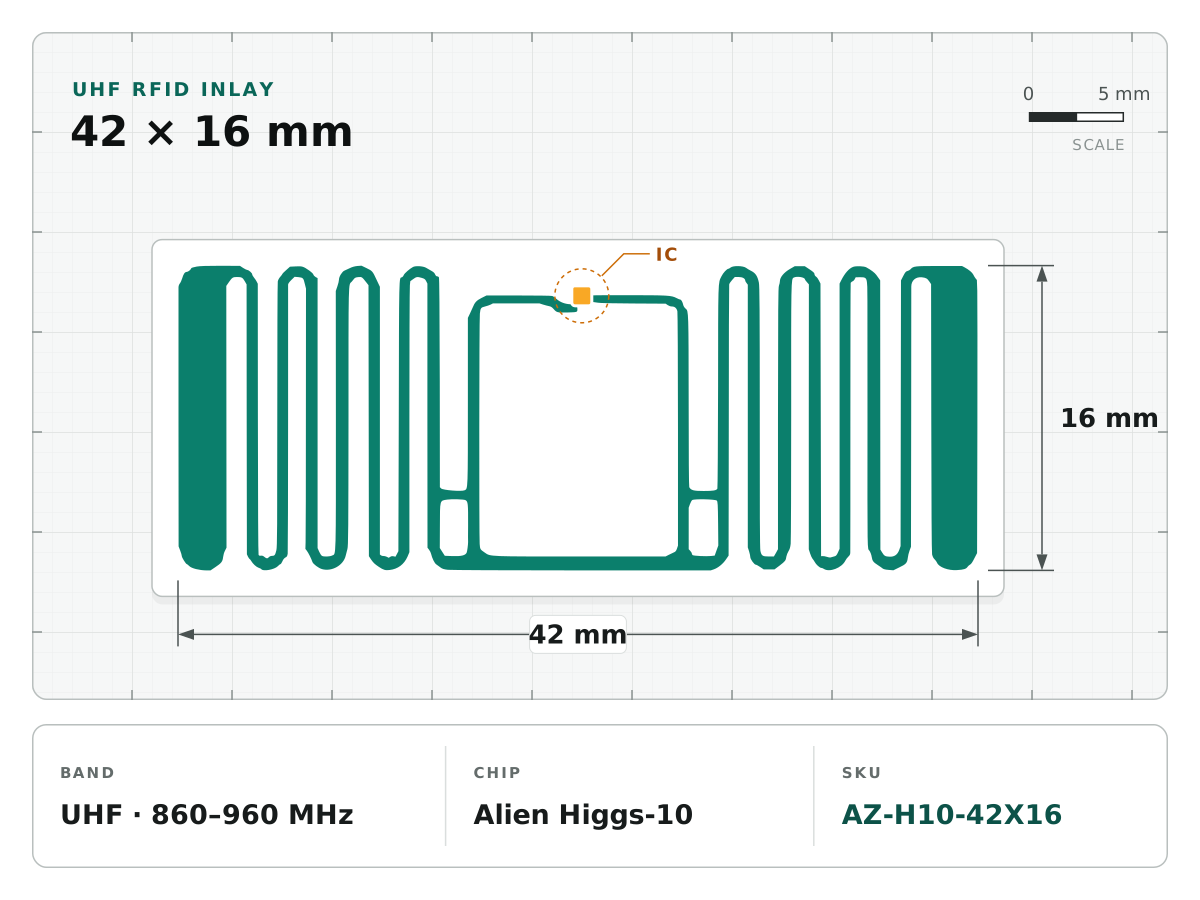
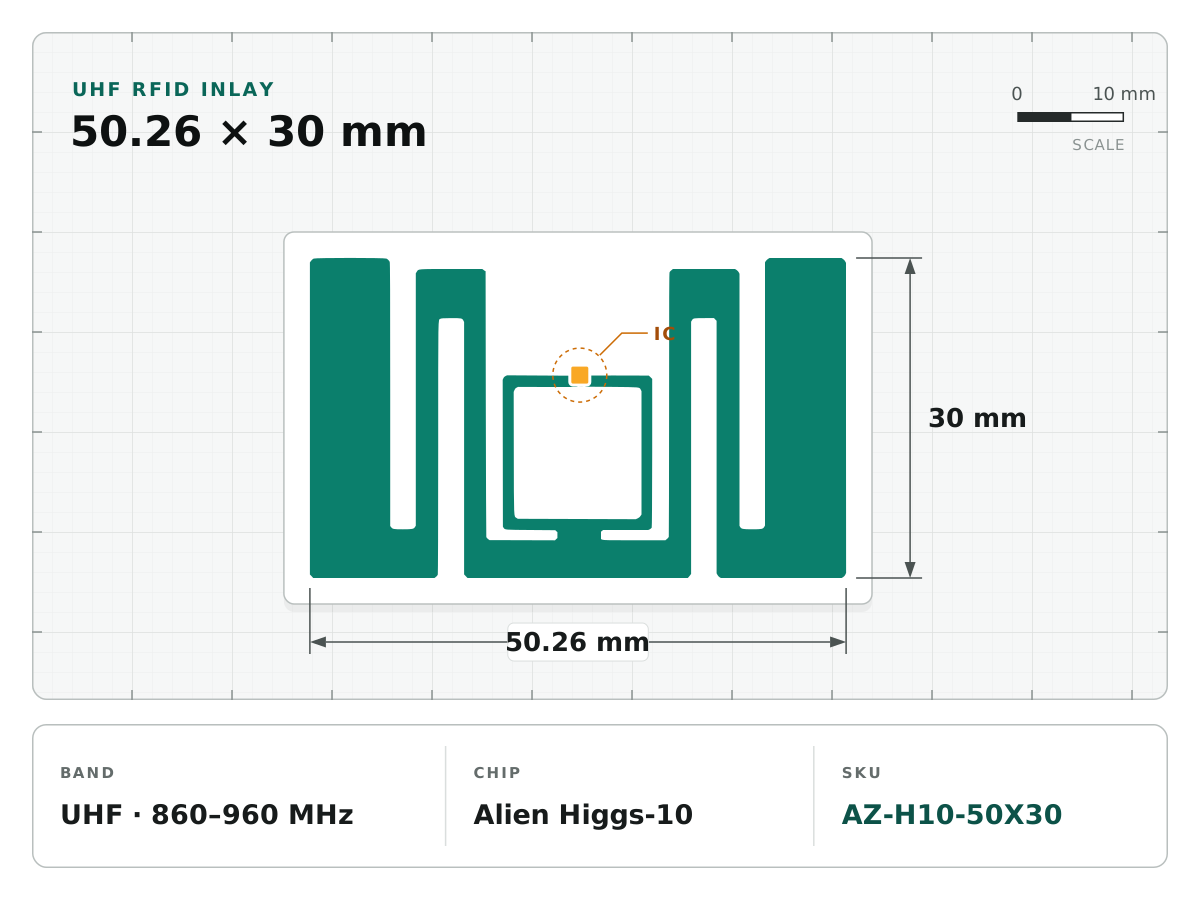
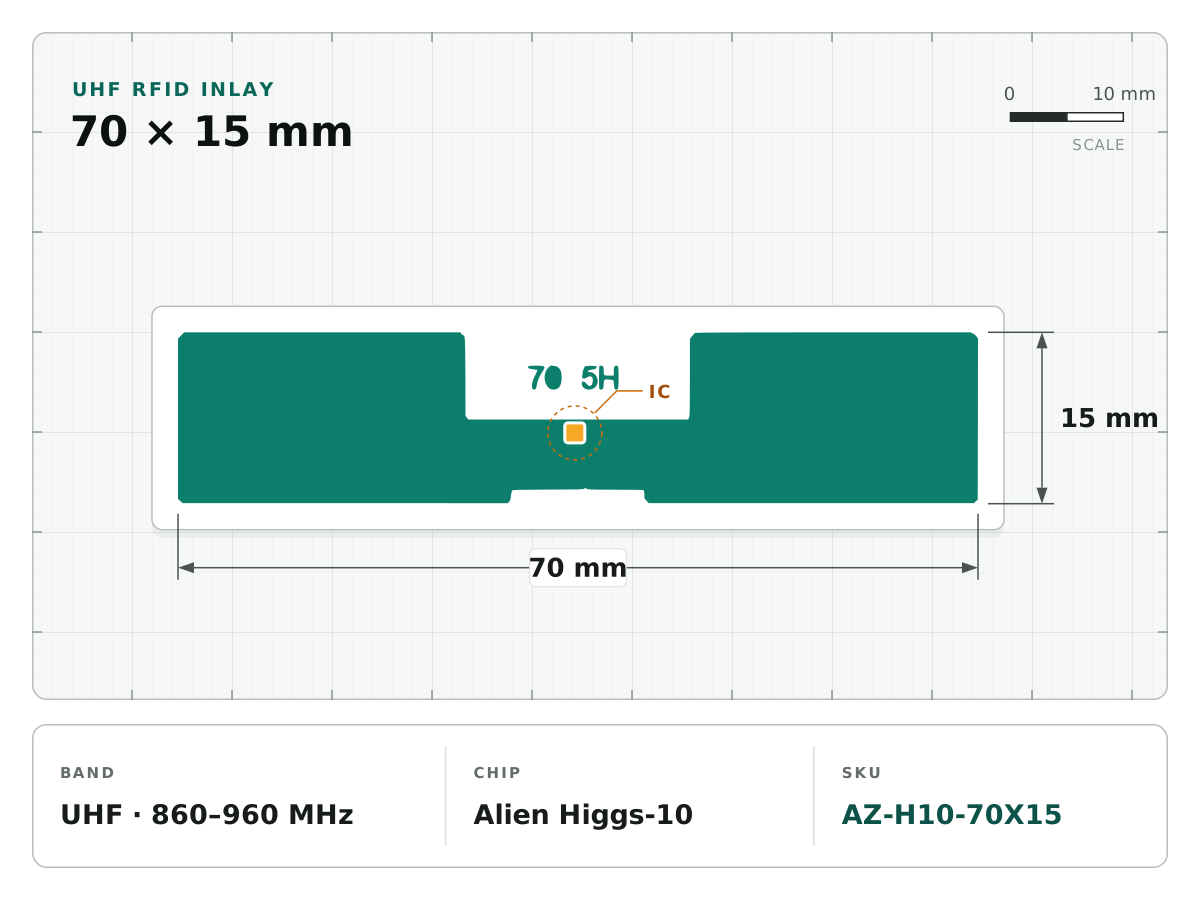
Compare UHF tag combinations with custom encoding options after the data scheme is fixed. Chip user memory is a separate requirement; SGTIN-96 does not need business data copied into that bank.
Specify verification and exception handling
Provide known input records with expected decoded identities. Validate the encoder against the standard, write sample tags, read them back and decode them independently. Compare with the original product and serial records, plus printed identifiers where present.
Define uniqueness, rejected-tag handling, job restart behavior, locking and the final reconciliation report. Keep allocated serials under one controlled process across multiple suppliers or lines.
Send the scheme, prefix length, sample records and verification requirements through the Antenza RFQ form. Approve decoded sample results before releasing a production encoding file.