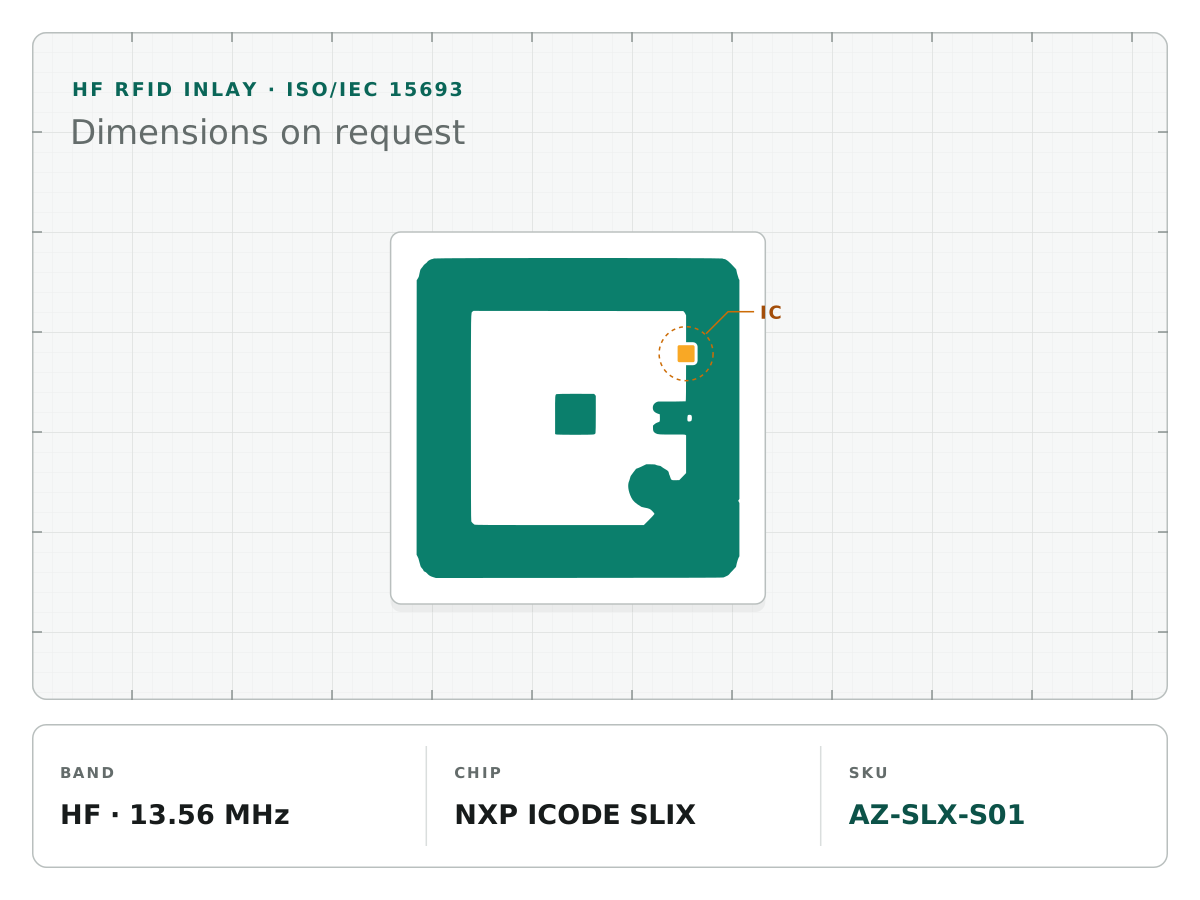
 HF / NFC
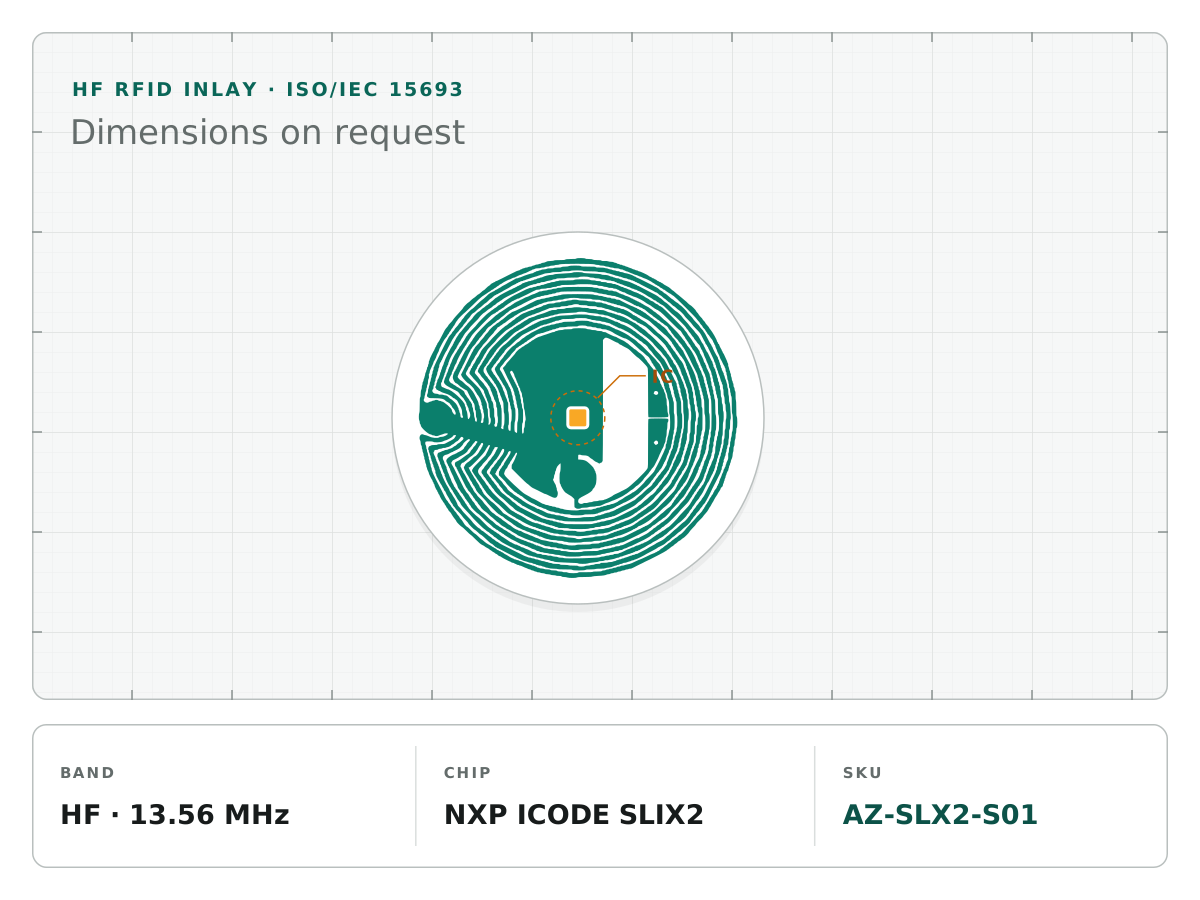
HF / NFC NXP ICODE SLIX2
AZ-SLX2-S01
ICODE SLIX2 HF RFID Tag, AZ-SLX2-S01
ICODE SLIX2 HF RFID tag for ISO/IEC 15693 systems such as library and pharmaceutical readers.
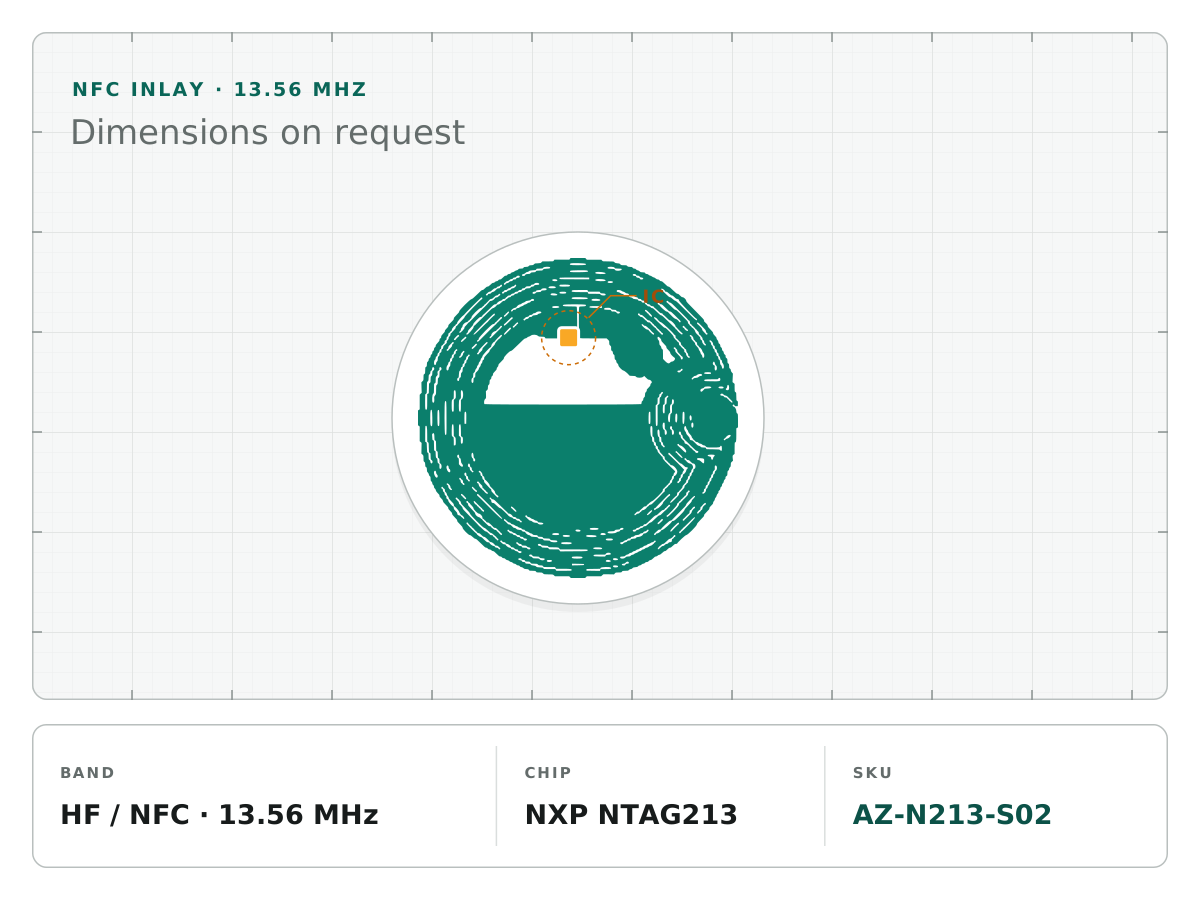
Full dimensions for this design are available on request. Ask for the specification and samples before ordering. Request specifications
Validate samples first. Engineer reply within 24 h.
See the sample validation checklist
| SKU | AZ-SLX2-S01 |
|---|---|
| Frequency | HF 13.56 MHz (NFC) |
| Protocol | ISO/IEC 15693, NFC Forum Type 5 |
| Chip | NXP ICODE SLIX2 |
| Memory | 2,528-bit user memory plus a 16-bit counter block, 64-bit UID |
| Antenna size | On request |
| Format | Inlay (dry / wet / label) |
| Typical applications | Pharma & healthcare, Libraries & archives |
Design and application notes
ICODE SLIX2 HF RFID Tag, AZ-SLX2-S01 is a 13.56 MHz HF RFID tag with the NXP ICODE SLIX2 chip on an HF coil antenna, following ISO/IEC 15693, NFC Forum Type 5. Library, pharmaceutical or document systems need readers and applications that support ISO/IEC 15693. For NDEF, also check tag-type and record handling; for raw HF memory, check field and address mapping. Read back the complete content with the intended equipment.
NXP ICODE SLIX2 provides 2,528-bit user memory plus a 16-bit counter block, 64-bit UID. It follows ISO/IEC 15693, NFC Forum Type 5. Datasheet highlights: 32-byte ECC originality signature, password-protected privacy mode, EAS/AFI and memory segmentation; backwards compatible with ICODE SLIX.
Full dimensions for this design are available on request. Reading performance depends on the reader antenna, tag antenna size and surrounding material. Read back the complete sample content on the actual item with the intended equipment to confirm that the configuration meets the workflow.
Buyers typically use this HF RFID tag for pharmaceutical boxes, vials and specimen labels and library books and media.
The same chip and antenna are available as dry inlay, wet inlay or label; printing, data encoding and locking and custom label sizes are quoted on request. Start with samples, then move to volume once the tag passes your tests; volume orders are produced with our ISO 9001-certified production partner and 100% electrically tested inline.
Specification basis and validation
Vendor documents describe the chip, not finished-tag read range.
Confirm catalog dimensions against the final tag construction. Reference read ranges require sample testing on your item with your reader setup.
Order in the format you need
Confirm the construction and encoding during sampling, then quote the configuration you validated.
Dry inlay
Chip and antenna on a PET carrier without adhesive, for your own converting, hang tags or lamination.
Wet inlay
The same inlay with pressure-sensitive adhesive on a liner, applied like a NFC sticker.
Label
Paper or synthetic face stock over the inlay, blank or printed, with data encoded and locked.
Custom
Other label sizes, face stocks, adhesives, printing, encoding and roll formats on request.
What should the sample pass before a bulk order?
Agree the actual use conditions and pass criteria before selecting samples. The catalogue supports shortlisting; confirm finished-tag performance and delivery configuration in writing and through sample validation.
-
Validate the ISO/IEC 15693 devices and application
On real items, read back the agreed fields using the specified HF reader and application. If phone reading is required, separately check the phone, OS, application and data format, and record the expected result.
-
Check complete data and mounting
For raw HF data, verify the agreed addresses and fields. For NDEF, check usable capacity and the complete message. Reconcile unique and printed IDs, record adhesion separately, and approve access or locks after sample validation.
-
Record the approved construction and delivery configuration
Record the SKU, sample revision, lot, device settings, results and approver. Confirm final dimensions, materials, printing, encoding, quantity and delivery requirements, and agree which configuration changes require another trial.
Use the test record to save actual conditions and results. English and Chinese worksheets are provided; the agreed reviewer determines acceptance.
Download test recordHow ordering works
- 01
Specify
Share surface, read distance, chip preference and volume. We shortlist tags that fit.
- 02
Sample
Receive sample tags of the shortlisted designs to try in your own setup.
- 03
Validate
Test on your items, readers and printers. We adjust chip, size or format if needed.
- 04
Produce & ship
Volume production with 100% inline electrical test, then export shipping.
Frequently asked questions
Can I order the AZ-SLX2-S01 as a wet inlay or a printed label?
Yes. The same chip and antenna are available as a dry inlay (no adhesive), a wet inlay (adhesive on a liner) or a label with paper or synthetic face stock, blank or printed. Data encoding and locking and custom label sizes are quoted on request; see custom tags.
What reads the AZ-SLX2-S01?
NXP ICODE SLIX2 follows ISO/IEC 15693, NFC Forum Type 5. Choose a reader or phone and application that support ISO/IEC 15693. For NDEF, also check the tag type and complete-record handling; for raw HF memory, check field and address mapping. Read back the complete sample content with the intended device and application and verify the workflow.
How do I get samples and a quote for the AZ-SLX2-S01?
Use the quote button on this page or request samples. Tell us the item, surface, read distance and annual volume; an engineer replies within 24 hours with a recommendation and a sample plan.
Selection guides
-
UHF, HF or NFC? Choose the RFID Frequency for the Job
Compare RFID frequencies by reading workflow, phone compatibility and tagged material. Choose a practical shortlist before testing tags on your items.
-
How to Choose an RFID Tag: Seven Questions Before RFQ
Specify the surface, read event, available space, environment, data and delivery format. A seven-question checklist makes RFID samples and quotes useful.
Related designs
HF / NFC 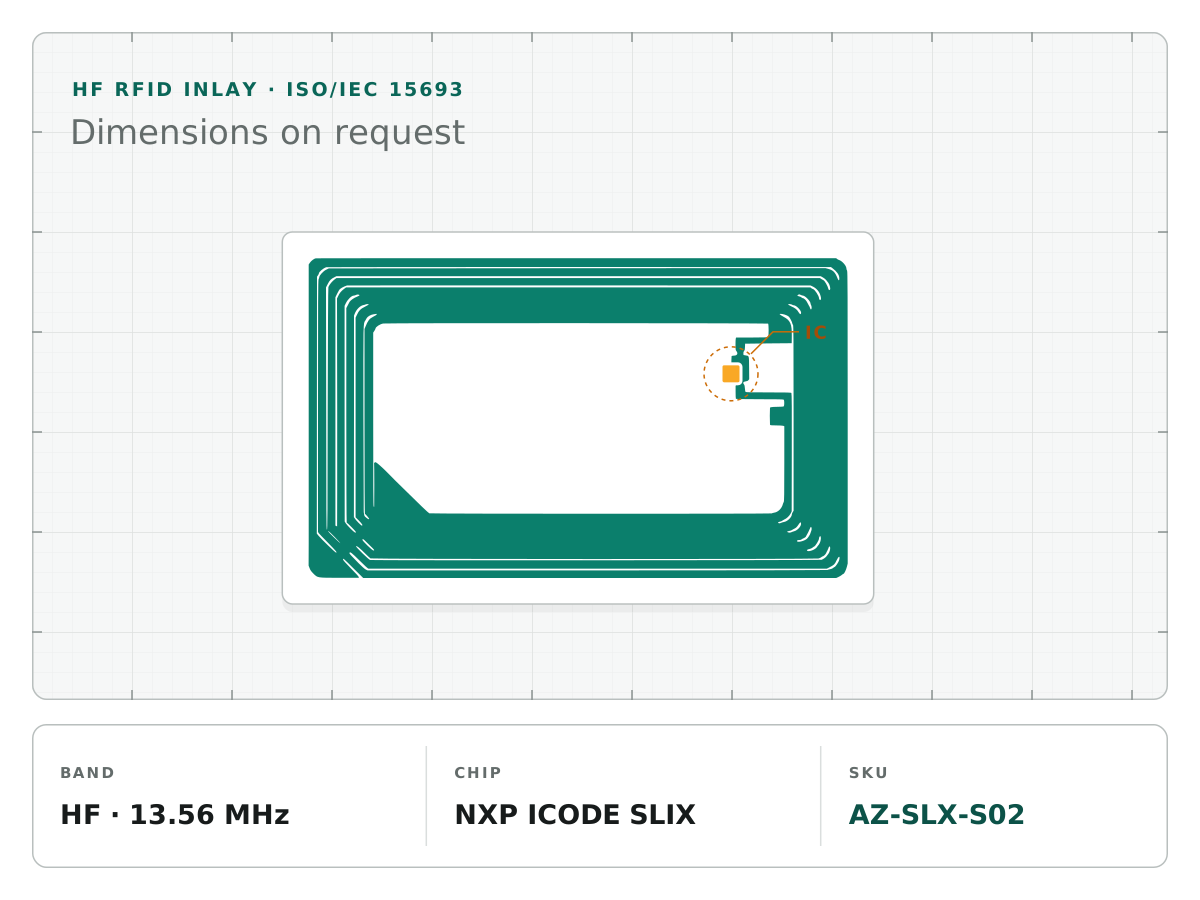 HF / NFC
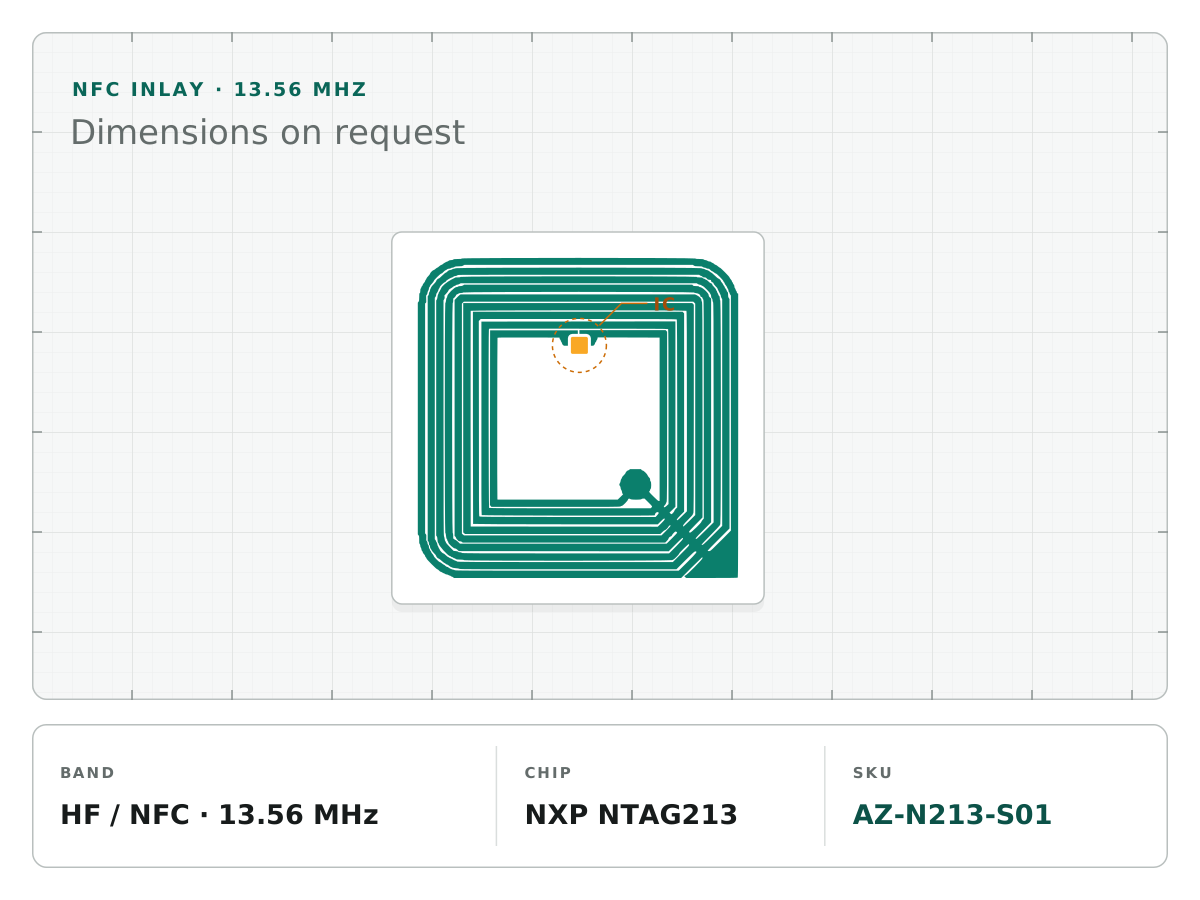 HF / NFC
 HF / NFC
Talk to an RFID engineer
Not sure which tag fits your project?
Send the surface, read distance and volume. An engineer replies within 24 hours with a recommendation and a sample plan.
Email us: sales@antenza.com